
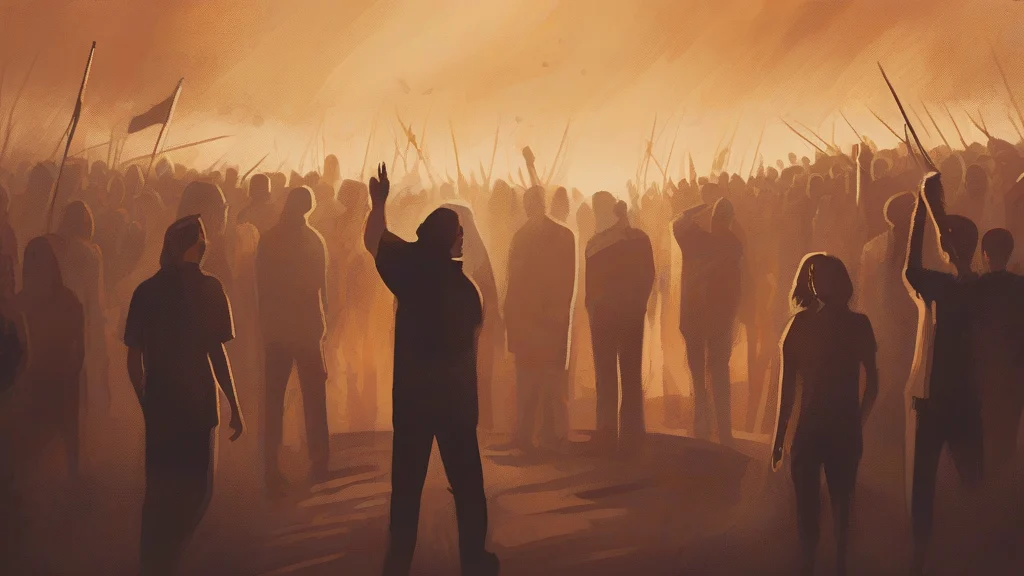
What does outcry mean?
An outcry is a forceful, public expression of anger or opposition, usually directed at a decision, action, or event that many people believe is wrong or unfair. The word often suggests that criticism has spread beyond one individual or group and become a significant public reaction. Expressions such as “public outcry,” “mass outcry,” and “fierce outcry” emphasize the scale or intensity of the response. In news reporting, it commonly describes protests, objections from the public, or reactions from organizations and communities. An outcry may be peaceful, organized, or simply vociferous, and it need not involve formal demonstrations. The word is especially useful when describing how an issue has provoked broad concern or generated pressure for change.
nounA strong expression of public anger, protest, or objection to an event, decision, or action. An outcry generally involves substantial or widely expressed opposition.
- A strong or widespread expression of public anger, protest, or opposition.
"The proposed restrictions prompted a public outcry from civil-liberties groups."
"There was an immediate outcry after the announcement was made."
"The policy was withdrawn following an outcry from local communities."
Used when referring to separate protests, reactions, or expressions of public opposition.
"The organization faced widespread outcries after the controversial announcement."
An outcry turns individual objections into a public wave of protest.
Reviewed by Deb Chak, Editor. AI-assisted content curated by RJS Tech Solutions LLP.
Where does outcry come from?
The noun combines the prefix “out-” with “cry,” reflecting the idea of expressing anger or protest outwardly. “Cry” has long been used for a loud or public expression of emotion, while the compound “outcry” became established in the early modern period for a collective outcry. The word shares its core sense with related forms such as “crier” and “crying,” while “out” contributes the idea of something expressed publicly or to an external audience.
How outcry is actually used
Generally formal and journalistic. It is used for public or collective protest rather than a private complaint.