
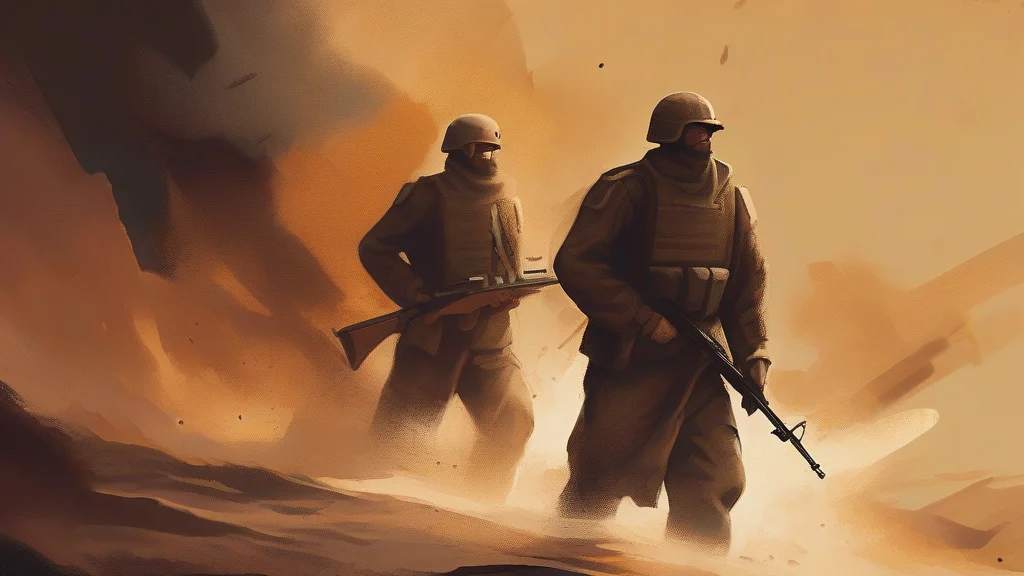
What does outflanking mean?
Outflanking means moving around the side of an opponent or finding an indirect route that bypasses a direct challenge. In military situations, it refers to attacking or getting around the side of an enemy position. In sport, competition, business, and politics, it describes gaining an advantage through maneuver, timing, or strategy rather than confronting the opposition directly. The word often conveys tactical intelligence and suggests that success comes from changing position instead of simply overpowering an obstacle. Because it refers to going beyond the expected front line or direct path, outflanking has a strategic and sometimes somewhat figurative tone. It is especially useful for describing moments when someone succeeds by avoiding a confrontation or approaching a problem from an unexpected direction.
verbTo get around the side or flank of someone or something, especially an opponent in a battle or competition. It can also mean to gain an advantage by bypassing a person, group, or obstacle through indirect or strategic means.
- To move around the side or flank of an opponent, especially in military action or competition.
- To gain an advantage over someone or something by using indirect tactics or bypassing direct confrontation.
"The cyclist outflanked the riders ahead and took the lead near the final hill."
"The troops outflanked the enemy position before dawn."
"By offering a generous settlement, the company outflanked its competitors and secured an important market."
Outflanking turns a contest of direct force into a contest of position: the winner may reach the goal without confronting the obstacle head-on.
Reviewed by Deb Chak, Editor. AI-assisted content curated by RJS Tech Solutions LLP.
Where does outflanking come from?
The word combines the prefix out-, meaning beyond or to the outside of, with flank, the side of the body or military formation. The underlying root is found in several English forms, including flank and flanking. Its development from the idea of moving around a formation's side to the broader figurative sense of gaining an advantage through indirect tactics reflects a long history of military usage.
Related word forms
How outflanking is actually used
Often used in military, sporting, and competitive contexts. The figurative sense is common in business and politics and can suggest clever maneuvering rather than direct confrontation.
Easily confused with outflanking
Outflanking is the present-participle or -ing form of the verb outflank, while outflank is the base form used in other grammatical forms.