
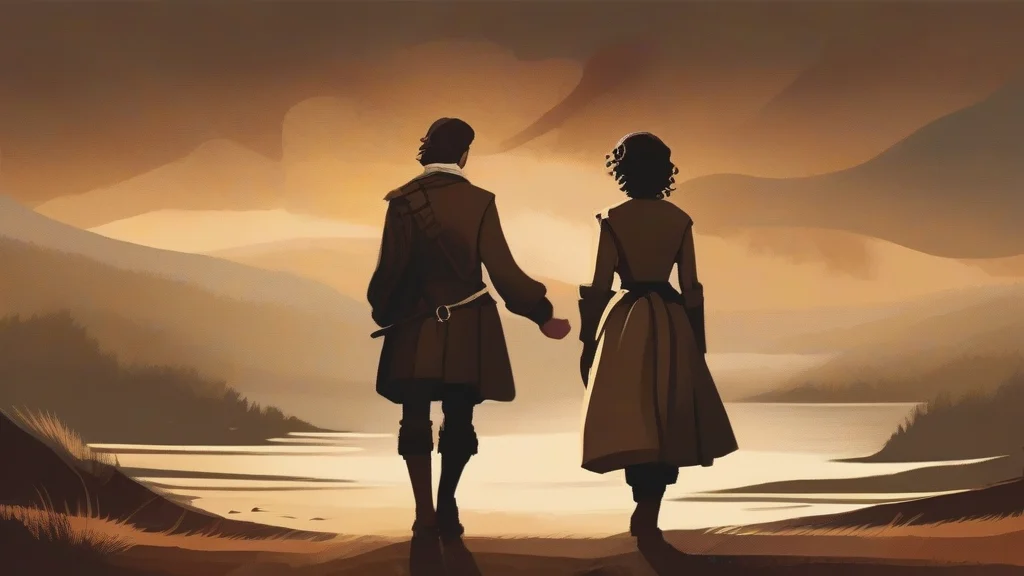
What does outlander mean?
An outlander is a person who comes from somewhere else and is viewed as foreign to a particular place, community, or social group. The word may describe an actual newcomer, such as a visitor entering a remote rural community, or someone who is treated as not fully belonging despite living in the area. It can also suggest exclusion or isolation when an established community distrusts someone perceived as an intruder or an unknown quantity. “Outsider” is the more neutral and widely used modern term, while “outlander” often has a literary or historical flavour. In narrative contexts, the word commonly introduces a stranger whose unfamiliar background or perspective reveals assumptions and tensions within the community being observed. Its connotations range from simple foreignness to estrangement, making it especially effective for stories about belonging, cultural difference, and the reception of outsiders.
nounA person who is from another place, especially one regarded as foreign or not belonging to a particular community. It may also refer to someone who feels or is treated as an outsider.
- A person from another country, region, or locality, especially one considered foreign by the local population.
- A person who is excluded from or unfamiliar with a social group, community, or established way of life.
- A person who is regarded as not fully belonging to a place despite living there or having some connection with it.
"As a newcomer to the island community, she was regarded as an outlander at first."
"The novel's central character is an outlander who enters a remote community carrying secrets from his former life."
"Several members of the committee felt that the new director was an outlander and did not understand the organization."
Used when referring to more than one foreign, unfamiliar, or excluded person.
"The outlanders gradually adapted to the customs of the village."
Built from “out” and “land,” an outlander began as someone associated with territory beyond the settled world.
Reviewed by Deb Chak, Editor. AI-assisted content curated by RJS Tech Solutions LLP.
Where does outlander come from?
Outlander was formed in English from outland and the suffix -er. Outland originally referred to land beyond the inhabited or settled area, while an outlander came to mean a person from beyond a familiar place. The compound is associated with the 19th century and reflects an older geographical contrast between the settled interior and remote territory outside it.
Related word forms
How outlander is actually used
The term is more literary or old-fashioned than “outsider” and can suggest foreignness, exclusion, or a conspicuous lack of familiarity with a group. In fiction it is often used for a stranger who enters an isolated or tightly knit community.
Easily confused with outlander
An outlander is someone foreign to a place or group, whereas an alien may additionally mean an extraterrestrial or a person whose allegiance is considered foreign.