
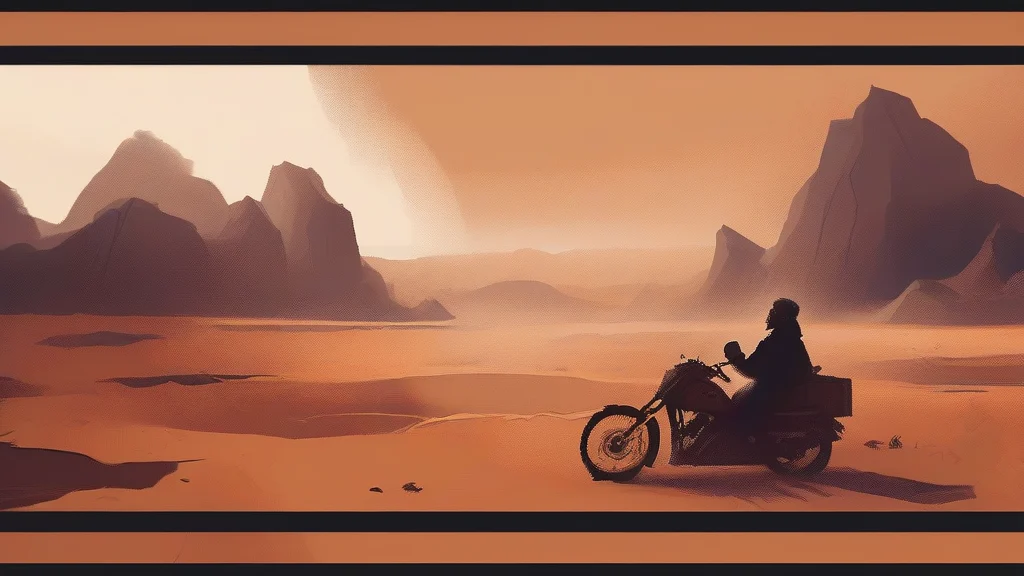
What does outland mean?
Outland denotes a remote or outlying area, usually one beyond a country's or region's principal cities and settled regions. The noun most often appears in the plural as “the outlands,” as in “people living in the outlands,” while the adjective can describe a place, community, or condition associated with such an area. Its implications vary with context: it may simply indicate geographic distance, but it can also suggest economic neglect, sparse services, or separation from centers of political and cultural influence. The word is chiefly associated with North American English, particularly the United States, and is less common than the more familiar “outskirts” when referring to the edge of a specific town. Compared with “remote,” “outland” often carries a broader territorial implication, describing an entire peripheral region rather than one distant location. It is therefore useful when discussing rural communities, peripheral territories, or places beyond the reach of major urban institutions.
A remote or outlying region, especially a sparsely populated area beyond a region's main cities or settled areas.
"The government established a mobile clinic for villages in the outlands."
Usually used in the plural form “outlands.”
Located in or characteristic of a remote, outlying area.
"The report documented poor access to healthcare in outland communities."
Chiefly North American; often used attributively before terms such as “community,” “region,” or “township.”
The plural is the normal and most idiomatic form of the noun, usually preceded by “the.”
"Many isolated villages in the outlands rely on satellite communication."
“Outland” is a spatial metaphor for everything beyond the places where cities, institutions, and daily life are concentrated.
Reviewed by Deb Chak, Editor. AI-assisted content curated by RJS Tech Solutions LLP.
Where does outland come from?
Outland was formed in English by combining “out” with “land.” It appeared in the early 19th century for a region or territory lying beyond a main settled area. Its later plural form, “outlands,” became the usual expression for remote peripheral regions, especially in North American usage.
Related word forms
How outland is actually used
The noun is most often used in the plural form “outlands.” The expression is chiefly North American and can suggest remoteness, limited infrastructure, or separation from major centers of population and power.
Easily confused with outland
Outskirts usually refers to the peripheral edge of a town or city, whereas outland more often suggests a remote region beyond the principal settled or populated area.