What does backwater mean?
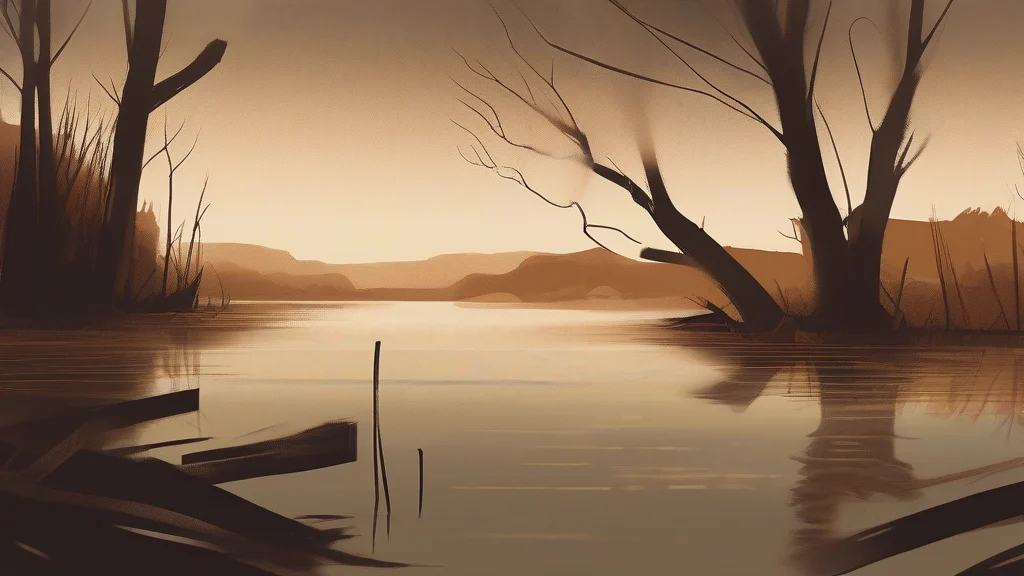
A backwater is, in its most literal sense, a body of water that has been cut off from the main current of a river — a side channel, bayou, or pool where the water lies still or moves sluggishly. The term also arises in engineering, where it describes water whose level is raised behind an obstruction such as a dam. From this physical image comes the word's far more common figurative meaning: a place — often a small town or remote region — that is isolated, sleepy, and untouched by progress, culture, or new ideas. Calling somewhere a backwater implies stagnation and provincialism, which gives the word a mildly disparaging edge; describing a city as a 'cultural backwater' is rarely meant as a compliment. The metaphor works because it transfers the qualities of still, unmoving water to human communities: nothing flows in, and nothing flows out. Whether applied to oxbow lakes or overlooked provinces, backwater remains a vivid, widely understood way to describe places the current of change has passed by.
nounA part of a river where the water is stagnant or moves very little, cut off from the main current. Figuratively, a place or situation that is isolated, quiet, and untouched by progress, activity, or new ideas.
- A stretch of water held back from the main flow of a river, typically stagnant or slow-moving; also water backed up by an obstruction or tide.
- (Figurative) A quiet, isolated place regarded as backward or unaffected by progress, activity, or cultural development.
"The village had become a sleepy backwater that the new highway conveniently bypassed."
"Herons fished quietly in the backwater behind the old mill, where the current barely stirred."
"Critics dismissed the small publishing house as a literary backwater, far from the trends of London and New York."
The plural is common both for multiple literal stretches of still water (e.g. the backwaters of Kerala) and for figurative references to several isolated or unprogressive places.
"Houseboats drift slowly through the palm-fringed backwaters of Kerala."
The word 'backwater' literally describes water that has stopped flowing — which is exactly why we use it to describe towns and institutions that have stopped changing.
Reviewed by Deb Chak, Editor. AI-assisted content curated by RJS Tech Solutions LLP.
Etymology of backwater
Backwater was formed in English by compounding the native words 'back' and 'water', first attested around the late 17th century in its literal sense of water held back or turned back from its usual course. The figurative sense of an isolated, unprogressive place developed later, drawing on the image of stagnant water left behind by the main current. As a transparent English compound rather than a borrowing, it has no cognates in other languages, though it belongs to the wider family of English compounds built on 'back-' such as backwash and backlash.
How backwater is actually used
Both literal and figurative senses are standard in British and American English. The figurative sense carries a mildly negative connotation of stagnation or provincialism, so it should be used with care when describing real places or institutions. In hydrology and engineering contexts, 'backwater' is a neutral technical term for water whose level is raised or flow impeded by a downstream obstruction such as a dam or tide.
Easily confused with backwater
Backwash refers to the backward flow of water (as behind a moving boat) or to lingering after-effects of an event, whereas backwater denotes a stagnant stretch of water or, figuratively, an isolated, unprogressive place.