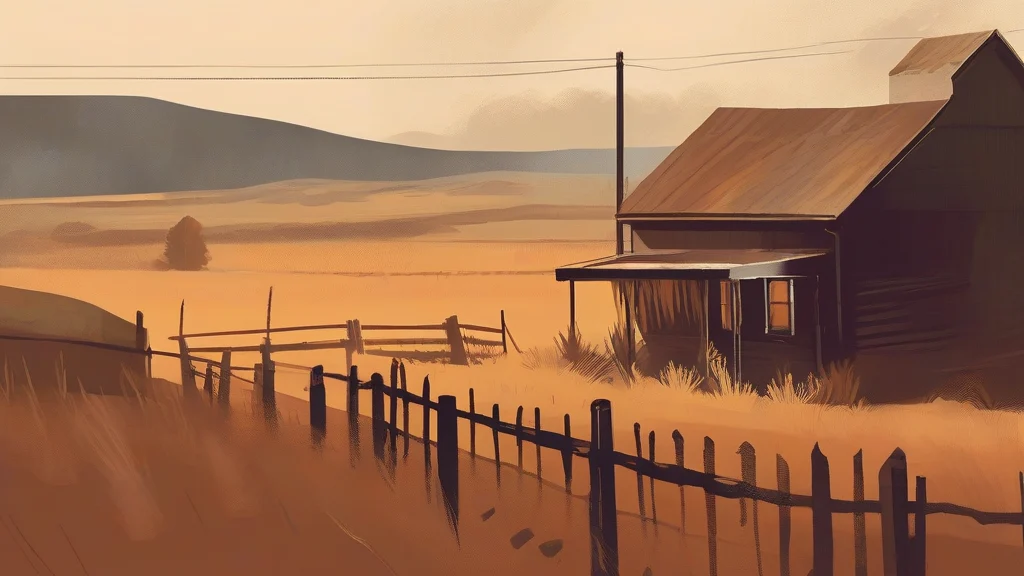
What does boondock mean?
The word "boondock" refers to remote, rough country far removed from towns, cities, and modern conveniences. In practice, English speakers almost always use its plural form, "the boondocks," to describe isolated rural regions — saying someone lives "way out in the boondocks" suggests both physical remoteness and, sometimes playfully or disparagingly, cultural isolation. The word entered American English through the military: during the American presence in the Philippines, soldiers borrowed the Tagalog word "bundok," meaning mountain, and adapted it into their own slang. It spread widely during the Second World War and settled into everyday American usage. Beyond geography, the term has spawned a small family of derivatives: a "boondocker" is someone who lives in or comes from such country, and among recreational vehicle enthusiasts, "boondocking" describes camping independently without water, power, or sewer hookups. Informal and distinctly American, "boondock" remains a vivid, evocative way to describe the far edge of civilization.
nounA remote, isolated area of rough countryside far from towns and cities. The word is almost always used in its plural form, 'the boondocks', though the singular exists as a back-formation.
- A remote, sparsely populated rural region regarded as isolated or backward; nearly always encountered in the plural form 'the boondocks'.
- (Informal, among RV and camping enthusiasts) To camp in a self-contained vehicle without hookups or at an established campground, by extension of the noun.
"After retiring, they moved to a cabin deep in the boondock, miles from the nearest paved road."
"He grew up way out in the boondocks, where the nearest neighbor was two miles away."
"We spent a week boondocking across the desert in our camper, parking wherever the view took us."
The plural 'the boondocks' is the standard and overwhelmingly dominant form; the singular 'a boondock' is seldom heard.
"They disappeared into the boondocks for the summer, with no phone signal and no neighbors for miles."
'Boondock' began life as 'bundok' — the Tagalog word for mountain — adopted by American soldiers serving in the Philippines.
Reviewed by Deb Chak, Editor. AI-assisted content curated by RJS Tech Solutions LLP.
Etymology of boondock
"Boondock" derives from the Tagalog word "bundok," meaning mountain, which American military personnel stationed in the Philippines adopted into slang during the early twentieth century. The pluralized form "boondocks" came to mean wild, inaccessible terrain generally, and the term gained broad currency among American servicemen during the Second World War before entering mainstream colloquial American English. Its later derivatives, such as "boondocking," are American coinages built on this borrowed root rather than shared inheritances from other languages.
Related word forms
How boondock is actually used
The word carries informal register and often a faint condescension when applied to people or places seen as unsophisticated, though it can also be used affectionately or neutrally. It is overwhelmingly American; British speakers would more likely say 'the sticks' or 'the back of beyond'. The plural 'boondocks' is far more common than the singular 'boondock', which functions mainly as a base for derivatives like 'boondocking'.