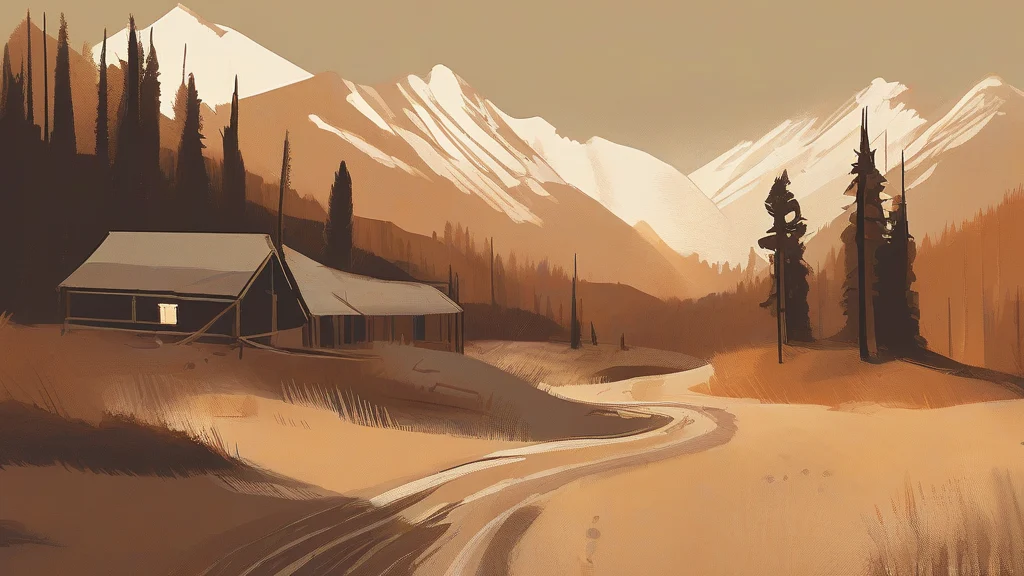
What does backcountry mean?
Backcountry refers to a remote, sparsely inhabited region lying beyond the settled areas of a country — land without towns, paved roads, or everyday infrastructure. In modern usage it is most closely associated with outdoor recreation: backcountry hiking, camping, and skiing all involve travelling into wild, undeveloped terrain where help, supplies, and communication may be hours or days away. The word is especially prevalent in North America, where vast public lands make backcountry travel a popular pursuit, and park services maintain dedicated rules and rescue operations for it. Historically, the term described the inland frontiers of colonial settlement, places distant from government and established communities. Its synonyms include hinterland, wilderness, outback, and backwoods, though each carries slightly different nuances: backwoods implies forest, while boondocks leans colloquial. Backcountry itself remains a neutral, practical term — evocative of self-reliance, solitude, and unspoiled landscape rather than backwardness.
nounA remote, sparsely populated or undeveloped region, especially one away from settled areas, towns, and roads; the wilderness or hinterland beyond the populated frontier of a country.
- A remote, undeveloped region of a country, away from towns, roads, and settlements — especially as a destination for outdoor activities like hiking, camping, and backcountry skiing.
- (Historical) The unsettled inland territories lying beyond the colonial or national frontier.
"They spent a week hiking through the backcountry of Yellowstone, miles from any road or ranger station."
"Rangers rescued two lost hikers deep in the backcountry after an overnight snowstorm."
"In eighteenth-century America, settlers pushing into the backcountry often lived far from courts, churches, and colonial authority."
Rarely used in the plural; backcountry is almost always treated as an uncountable mass noun referring to remote terrain generally. A plural form exists but appears only occasionally in formal or comparative writing.
"Explorers compared the backcountries of Alaska and Patagonia."
The word "backcountry" was once so politically charged that colonists used it to describe the lawless lands beyond British control — today it's the term skiers and hikers use for the wildest, most untouched corners of the map.
Reviewed by Deb Chak, Editor. AI-assisted content curated by RJS Tech Solutions LLP.
Etymology of backcountry
Backcountry is a compound formed from "back" plus "country", with "country" deriving ultimately from Latin "contra" (meaning "against" or "opposite"), which passed through Old French "contre/cuntrée" to denote a tract of land. The compound arose in English during the colonial era, particularly in seventeenth- and eighteenth-century America, where it described the unsettled lands lying behind or beyond the coastal settlements. It shares its root in Latin "contra" with words such as "counter", "county", and "countryside".
How backcountry is actually used
The word carries a neutral-to-positive connotation in modern recreational contexts — backcountry is prized by hikers, skiers, and campers for its solitude and unspoiled character. In historical writing about colonial America, it referred to the western frontier settlements. It is standard register, common in both journalism and outdoor literature, though it is most strongly associated with North American English; in Britain similar ideas are expressed with "the sticks", "the wilds", or "remote areas".
Easily confused with backcountry
"Backwoods" refers specifically to remote forested regions (and can carry connotations of cultural isolation), while "backcountry" is broader, covering any remote terrain such as mountains, deserts, or forests.
"Boondocks" is an informal American term for isolated rural areas far from cities, whereas "backcountry" is more neutral and typically denotes wild, undeveloped land used for outdoor recreation rather than simply remoteness from urban life.