
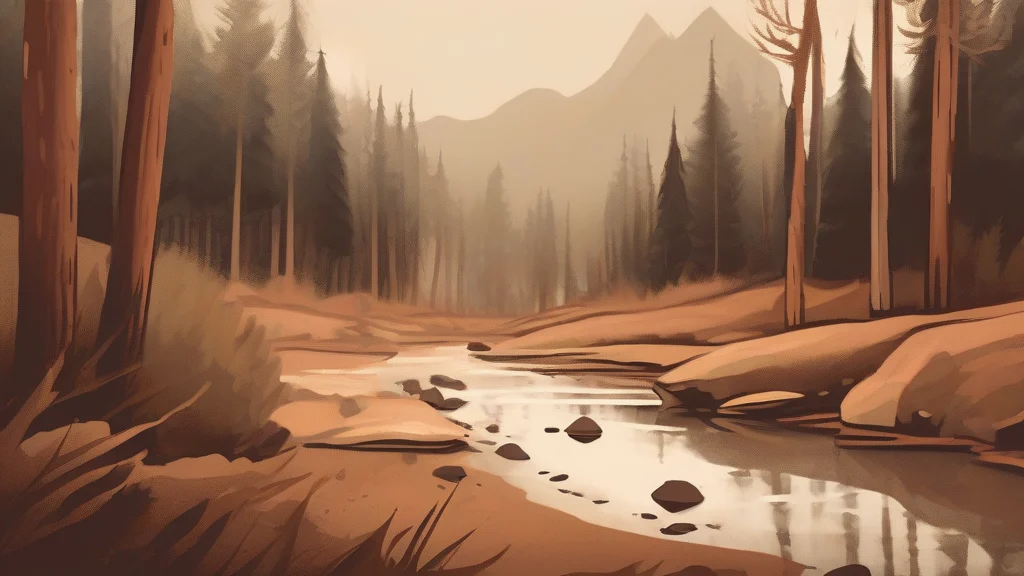
What does wilderness mean?
“Wilderness” denotes an uncultivated, largely natural area of land, especially one with dense vegetation, wild animals, and little permanent settlement or human development. The word is often associated with remote mountains, forests, deserts, and other landscapes where people remain relatively isolated from ordinary urban life. It can also describe a wild or untamed condition more generally. Figuratively, “wilderness” may refer to moral disorder, cultural emptiness, or an absence of guidance, as in “a wilderness of confusion.” Its modern meaning developed from an earlier focus on wild animals: the Old English term underlying it referred to a wild beast, and the word eventually came to denote the territory associated with such animals. In legal and environmental contexts, the term can include landscapes that are protected and managed rather than entirely pristine. Wilderness is therefore useful when describing both a physical environment and a metaphorical absence of order or civilization.
nounAn uncultivated or largely uninhabited area of land, especially one characterized by natural vegetation and few or no human alterations. In figurative use, it refers to a place or condition perceived as disorderly, morally unregulated, or intellectually barren.
- An uncultivated or largely uninhabited region, especially one covered by natural vegetation and containing few human modifications.
- A wild, untamed, or uncultivated condition or environment.
- A figurative condition of moral disorder, cultural isolation, or intellectual barrenness.
"The trail led deep into the wilderness, where no roads or buildings could be seen."
"After the storm, rescuers searched the wilderness for the missing hikers."
"The scholar warned that the rapid expansion of technology could create a cultural wilderness if people stopped asking fundamental questions."
The plural is rare. In ordinary usage, “wilderness” is often treated as a singular or mass noun, and “wilds” is more common when referring to extensive uncultivated regions.
"The novel imagines several wildernesses where no laws are recognized."
The word “wilderness” originally referred to wild animals themselves before it came to describe the land where they roam.
Reviewed by Deb Chak, Editor. AI-assisted content curated by RJS Tech Solutions LLP.
Where does wilderness come from?
The word “wilderness” developed in Middle English from an Old English compound associated with “wild beast,” wildeorn, together with the noun-forming suffix -ness. Its early sense concerned wild animals or the state of being wild; by the late medieval period it had developed the sense of uncultivated land. The word is related to “wild,” and the same Old English root appears in derivatives such as “wilder” and “wildness,” while “wildebeest” reflects a related Germanic word meaning “wild animal.”
How wilderness is actually used
“Wilderness” is neutral in register and commonly describes land that is substantially undeveloped rather than completely untouched; many legally protected landscapes have trails, visitor facilities, or other managed features. The figurative sense is usually critical or evaluative.
Easily confused with wilderness
“Wilderness” is a noun referring to uncultivated territory or a wild, barren condition, while “wild” is primarily an adjective describing something untamed, natural, or uncontrolled.