
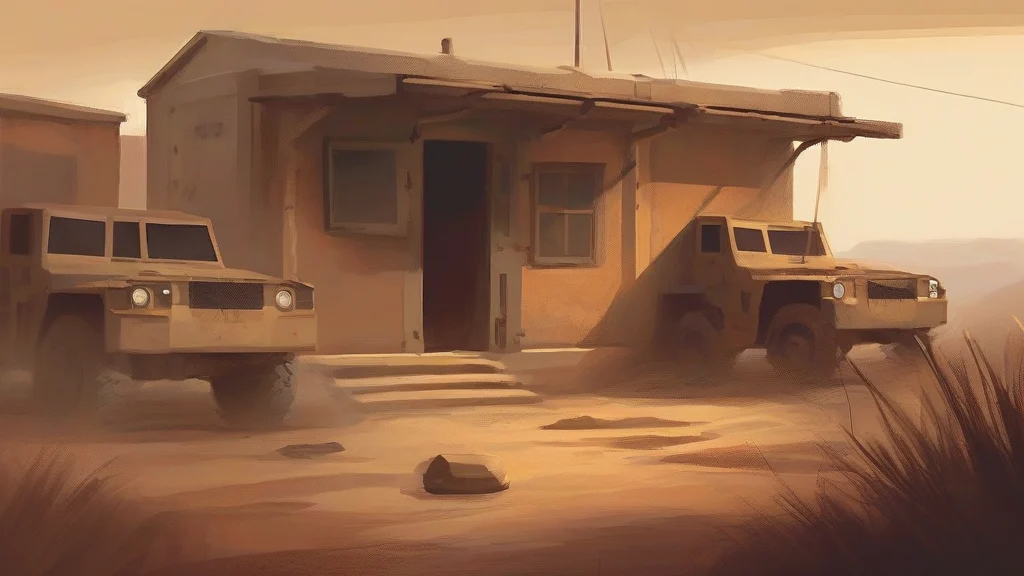
What does outpost mean?
An outpost is a position, establishment, or settlement located outside a larger base or center. In its traditional military sense, it may contain a small garrison and serve as a place for observation, defense, communication, or the protection of a wider operation. Historically, the word also referred to remote trading posts and frontier settlements established by explorers, traders, or colonial administrations. Today, it is sometimes used figuratively to describe a strategically positioned office, installation, or community. “Outpost” generally conveys remoteness from a main center and a degree of isolation, exposure, or limited resources. It is especially useful when describing places that function as a foothold or staging point beyond a larger territory. The term can carry a historical or frontier association, so in contemporary political writing it may imply strategic separation or a peripheral position.
nounA military or strategic position established outside a main base or defended settlement, typically providing observation, protection, or support. The term can also refer more generally to a remote establishment serving as a base for further activity.
- A military or strategic position outside a main base or settlement.
- A remote settlement or establishment serving as a base for exploration, trade, administration, or other activity.
- A peripheral place or community that feels separated from a larger center of power or activity.
"The remote outpost was our last stop before crossing the mountains."
"A small patrol was stationed at the outpost throughout the winter."
"The trading outpost gradually developed into a busy frontier town."
The regular plural is “outposts.”
"The report described several isolated outposts along the border."
An outpost is a small foothold in a vast landscape: remote, vulnerable, and often established mainly to watch what comes next.
Reviewed by Deb Chak, Editor. AI-assisted content curated by RJS Tech Solutions LLP.
Where does outpost come from?
“Outpost” is formed from “out” and “post,” with the word dating in its modern sense to the early 17th century. Its military sense developed from the idea of a position placed outside the main defenses or limits of an army. The underlying element “post” comes through French from Latin, where “postis” meant a post or stake; several English words such as “postal,” “postage,” and “position” belong to the same broader Latin family of placing or putting.
Related word forms
How outpost is actually used
The word is common in military, historical, and frontier contexts. In modern political and social writing, it can also be used figuratively for a strategically placed office or community. The plural is normally “outposts.”
Easily confused with outpost
No distinction is needed because this is the headword itself.
An outpost is an establishment or position located outside a larger base or settlement, whereas a post is more generally a position, place of duty, or military station.