
What does ovate mean?
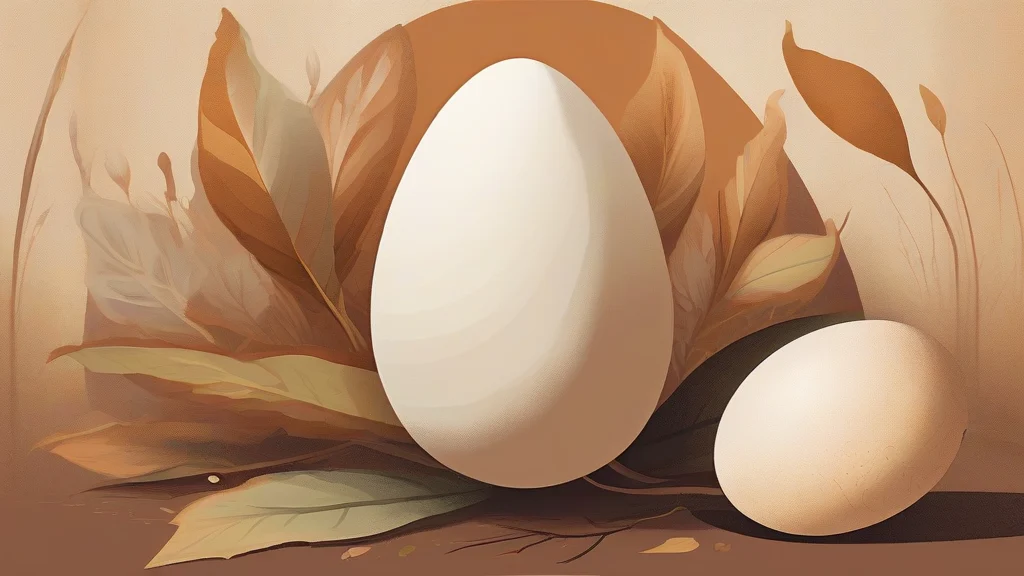
Ovate is a formal descriptive adjective meaning egg-shaped. Its most common use is in botany, where it describes leaves and other plant structures that are broadest below the middle, tapering toward the tip and remaining broader toward the base or stem. The word can also be applied more generally to objects or organisms with a similar outline, especially when a precise geometric description is useful. It is more technical than the everyday phrase “egg-shaped” and is therefore especially common in botanical descriptions, field guides, and scientific writing. Ovate should not be confused with ovoid, a broader term for any egg-shaped form, or with obovate, which describes an egg-like shape widest above the middle. Although ovate may initially sound obscure, it allows writers to describe shape compactly and precisely while making the orientation of that shape explicit.
adjectiveEgg-shaped, especially with a broader end toward the base and a narrower end toward the apex. In botany, the term describes leaves or other structures that are widest below the middle.
- Egg-shaped, especially with the broader end toward the base and the narrower end toward the apex; chiefly used in botany and natural-history description.
"The plant has broad, ovate leaves with finely serrated edges."
"Each seed is enclosed in a flattened, ovate capsule."
"The specimen has an ovate body, widest around its lower third."
Ovate comes from the same Latin root as ovum, the formal word for an egg.
Reviewed by Deb Chak, Editor. AI-assisted content curated by RJS Tech Solutions LLP.
Where does ovate come from?
The adjective comes through Latin ovatus, meaning “egg-shaped” or “like an egg,” from ovum, the Latin word for “egg.” The same root underlies English words including oval, ovoid, ovule, and ovary. Its development into the modern botanical term reflects a convention in which an ovate form is widest below the middle.
How ovate is actually used
Chiefly used in botanical, zoological, and descriptive contexts. In botanical terminology, it specifically indicates that the widest part lies below the middle; the related term obovate describes the reverse arrangement.
Easily confused with ovate
Ovate is chiefly a botanical shape term describing a form that is broadest below the middle, whereas ovoid is a more general term for anything shaped like an egg.