
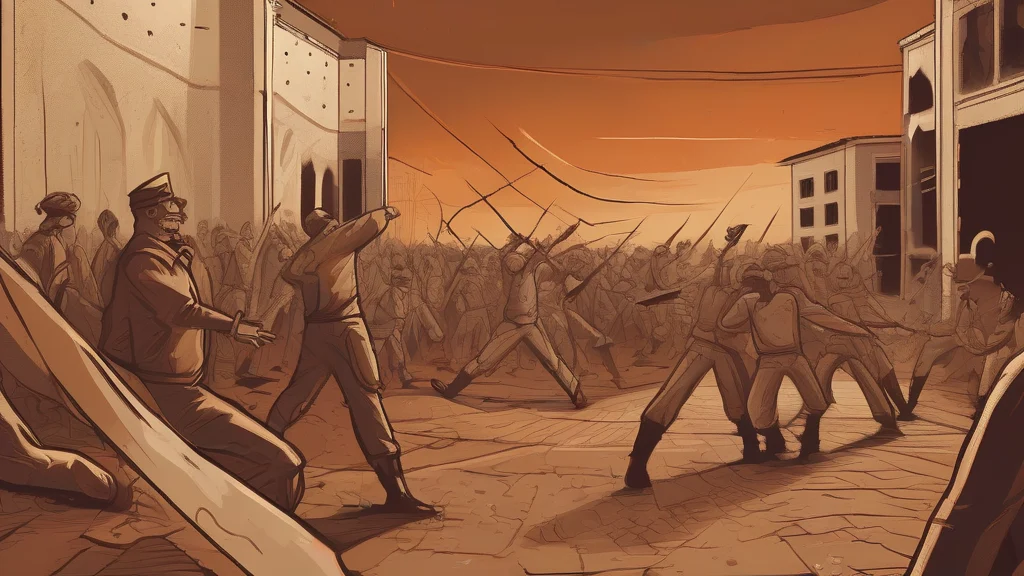
What does overthrowing mean?
Overthrowing means removing a ruler, government, regime, or other authority from power, usually by force, insurrection, or revolution. The word is especially associated with the deliberate seizure or destruction of established political power, although it can describe other reversals, such as overthrowing a leading competitor or defeating a champion. As the present participle of “overthrow,” it appears in constructions such as “overthrowing the government”; as a gerund, it can name the broader process, as in “the overthrowing of the monarchy.” The form conveys conflict and disruption more strongly than neutral expressions for an election or administrative dismissal. Its history is transparent: “overthrowing” combines “over,” indicating reversal or displacement, with “throw,” conveying force. The related adjective “overthrown” is commonly used after a ruler, regime, or government has lost control of the state.
verb (present participle and gerund)The present participle of overthrow, meaning to remove a government, ruler, or other authority from power. It is also used as a gerund in phrases such as “the overthrowing of the regime,” especially when referring to political or revolutionary change.
- Removing a ruler, government, regime, or other authority from power, especially through force, insurrection, or revolution.
- The process or act of removing such an authority from power, as in a gerundial construction.
"The military was accused of overthrowing the elected government."
"Rebel forces succeeded in overthrowing the military government."
"The overthrowing of the monarchy led to the creation of a republic."
An overthrown ruler may fall in battle, in a coup, or in a revolution.
Reviewed by Deb Chak, Editor. AI-assisted content curated by RJS Tech Solutions LLP.
Where does overthrowing come from?
The word is formed from the combination of “over” and “throw.” “Over” descends from Old English “ofer,” while “throw” comes from Old English “þrēan.” The compound “overthrow” developed with the sense of casting something down or reversing its position, which was later extended to the removal of rulers and governments from power.
Related word forms
How overthrowing is actually used
This form is chiefly used as the present participle of “overthrow” or as a gerund. It most often describes political or revolutionary change and therefore has a stronger, more confrontational sense than the neutral language of elections or legal removal from office.
Easily confused with overthrowing
“Overthrown” is the past participle and adjective describing something that has been removed from power, whereas “overthrowing” names the action of doing so.