
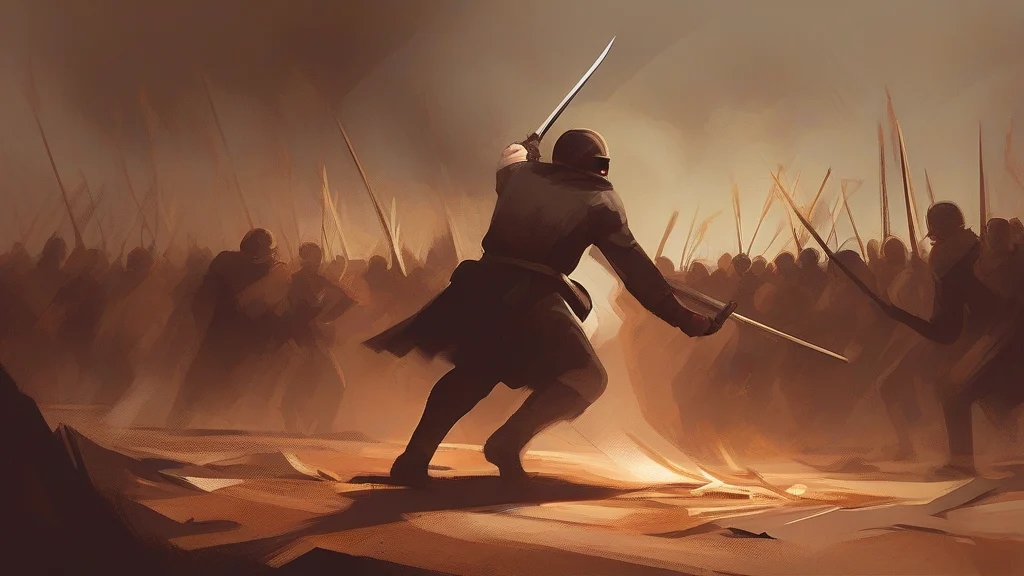
What does overthrow mean?
Overthrow is a strong verb meaning to remove a person or institution from power, usually through political conflict, revolution, or military force. It is especially associated with the defeat of a government, ruler, or regime, as in “the rebels overthrew the government.” The word can also be used more generally for overturning an established system or principle. As a noun, an overthrow is the act itself or the resulting change in authority. Its connotations are dramatic and often violent, although the word can be used figuratively when describing the collapse of a policy, reputation, or previous order. Overthrow is formed from the prefix over- and the word throw, evoking the idea of turning something over or bringing it down.
To defeat, remove, or displace someone or something from power or authority; to overturn or destroy something established.
"The opposition moved to overthrow the government."
Common in political, military, and historical contexts, but also used figuratively for overturning an established system or principle.
An act of removing a government, ruler, or other authority from power, or the resulting collapse of an established authority.
"The overthrow of the regime led to years of political instability."
Usually refers to a sudden and dramatic change in political power.
The plural is regular and is used when referring to multiple acts of overthrowing or multiple changes of authority.
"The website examines several famous overthrows and their consequences."
The word captures both the physical act of toppling something and the dramatic collapse of political authority.
Reviewed by Deb Chak, Editor. AI-assisted content curated by RJS Tech Solutions LLP.
Where does overthrow come from?
Overthrow is a compound of the prefix over- and the verb throw, meaning to overturn or bring down. The underlying verb throw comes from Old English þrēan, a Germanic word related to other Germanic forms such as thrust. The compound meaning “to overturn” developed into the modern sense of displacing someone from authority, while the noun meaning “a change of government” developed later.
Related word forms
How overthrow is actually used
The word is most commonly used in political and historical contexts. It can describe a forceful seizure of power, or more generally the removal or defeat of an established authority.