
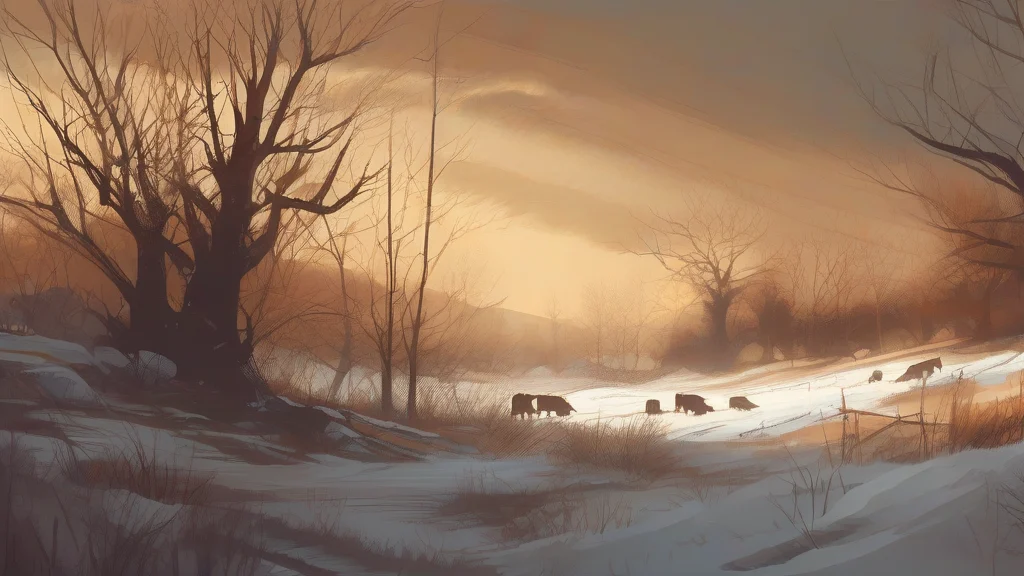
What does overwintering mean?
Overwintering means surviving through the winter, usually in a dormant, sheltered, or otherwise protected state. The word is especially common in biology, horticulture, and ecology when describing plants, insects, larvae, and other organisms that remain alive through cold months before becoming active again. People also use it when referring to keeping delicate plants or animals alive during winter. In figurative contexts, overwintering can mean maintaining a project, business, or other undertaking through a difficult period. The present participle ending makes the word especially natural for ongoing or habitual processes, as in “overwintering larvae” or “plants capable of overwintering.” It is less common than the simple verb “overwinter” in general conversation but is widely understood wherever seasonal survival or protection is being discussed.
To survive or remain alive through the winter, especially as a plant, animal, or other organism.
"Some frogs overwinter beneath the mud at the bottom of a pond."
Often used intransitively for organisms, and transitively when something is deliberately kept alive through winter.
The process or state of surviving through the winter.
"Overwintering is a crucial stage in the life cycle of many insects."
Common in biology, horticulture, and ecology; the form is often nominalized from the verb.
Many insects spend the winter in a dormant state, emerging only when warmth and food return in spring.
Reviewed by Deb Chak, Editor. AI-assisted content curated by RJS Tech Solutions LLP.
Etymology of overwintering
The word is formed from the prefix “over-” and the noun “winter,” with the present-participle ending “-ing.” Its basic sense, “through the winter,” is an extension of the older idea of passing through or lasting out a winter season. The related English words “winter” and “wintry” belong to the same Germanic root associated with the cold season.
Related word forms
How overwintering is actually used
Most often used in biological, horticultural, and ecological contexts. It is also used for people or organizations figuratively, though that use is less formal.
Easily confused with overwintering
“Overwintering” is the present participle or gerund of “overwinter,” while “overwinter” is the base verb form.