
What does oystercatcher mean?
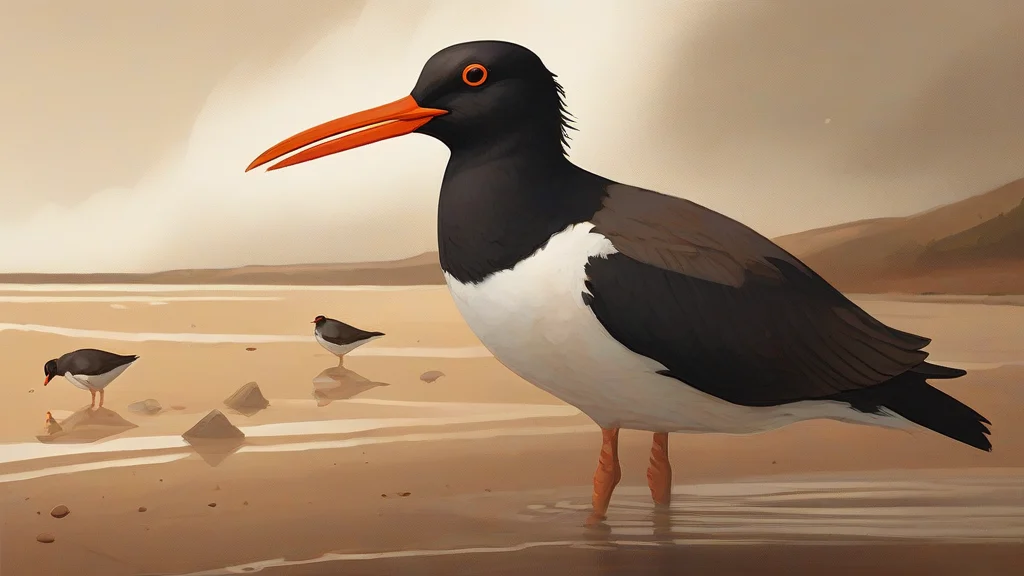
An oystercatcher is a distinctive coastal bird recognized by its long, bright orange or red bill, pinkish legs, and contrasting plumage. It is usually seen wading along beaches, mudflats, estuaries, and rocky shores, where it probes and pries open mussels, oysters, limpets, and other shellfish. The name comes from the bird’s feeding association with shellfish, although it is not restricted to eating oysters. The Eurasian oystercatcher is familiar around the coasts of Europe, while the American oystercatcher occurs in the Americas. Oystercatchers are often conspicuous because of their bold calls and dramatic courtship displays. In older usage, the same word could also refer to a person who gathered oysters, but today the bird is overwhelmingly the dominant meaning.
A shorebird of the genus Haematopus, typically with black-and-white or brown-and-white plumage and a long, bright bill used to open shellfish and other prey.
"A flock of oystercatchers gathered along the exposed shoreline."
The unqualified term most commonly refers to the Eurasian oystercatcher in British English; American English often distinguishes the American oystercatcher.
Historically, a person who gathered or collected oysters.
"The old harbour records list several oystercatchers among the workers responsible for collecting shellfish."
This sense is historical and uncommon in contemporary usage.
The usual plural is formed by adding “-s”; the plural can refer to multiple birds or, in the historical occupational sense, multiple people.
"Several oystercatchers fed along the tidal flats."
Despite its name, the oystercatcher is not an oyster specialist: its powerful bill also helps it prise open mussels, crabs, and other shellfish.
Reviewed by Deb Chak, Editor. AI-assisted content curated by RJS Tech Solutions LLP.
Where does oystercatcher come from?
The word combines “oyster” with “catcher,” literally describing a bird or person that catches or gathers oysters. The compound has been used since the eighteenth century for people involved in collecting oysters and later became established as the name of the bird. The modern bird name reflects the bill’s ability to open shellfish, not an exclusive diet of oysters. Its components are also recognizable in related forms such as “catch” and “catcher,” while “oyster” belongs to the older Germanic vocabulary seen in forms such as “oyster” and the related Germanic words for the mollusk.
How oystercatcher is actually used
In modern English, the word almost always refers to the bird. The bird name is used internationally, though the exact species associated with it varies by region; in Britain, “oystercatcher” commonly means the Eurasian oystercatcher.