
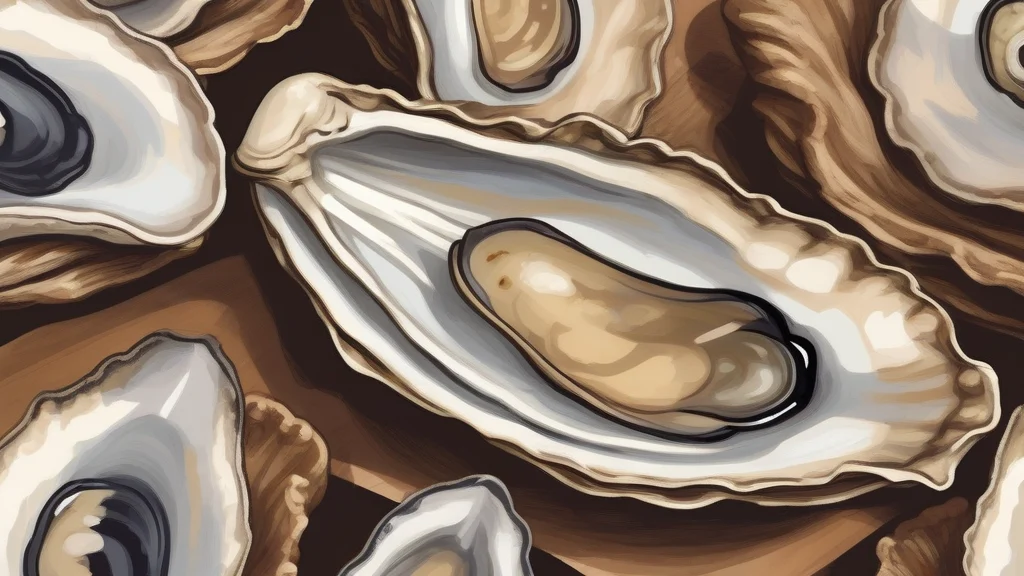
What does oyster mean?
An oyster is a large marine bivalve mollusk with a rough, irregular shell. Oysters live in saltwater environments such as oceans, bays, and estuaries, and are commonly served raw on the half shell, grilled, or cooked in sauces and stews. The word also has a figurative meaning: to call someone an oyster is to suggest that they are exceptionally private, reserved, or difficult to make conversation with. In culinary contexts, the term usually refers specifically to edible oysters, while “oyster” can more broadly refer to members of the oyster family and their close relatives. Familiar expressions include “shuck oysters,” “fresh oysters,” and “oyster shells.” Oysters have been valued as food for centuries and are also associated with coastal traditions, pearl production, and distinctive methods of aquaculture. Although the figurative sense is less common in formal writing, it remains a vivid description of someone who keeps their thoughts to themselves.
A large, edible marine bivalve mollusk with a rough, irregular shell, found in saltwater habitats.
"They ordered a dozen oysters on the half shell."
The culinary meaning is the most common. The figurative noun sense is informal and somewhat dated.
To gather, collect, or harvest oysters.
"The workers went oystering at low tide."
This is a relatively uncommon technical or occupational verb, especially in coastal dialects and traditional fishing contexts.
The standard plural is “oysters,” as in “a dozen oysters.”
"The restaurant specializes in freshly shucked oysters."
Many oyster species can begin life as males and later change sex, a remarkable transformation known as protandrous hermaphroditism.
Reviewed by Deb Chak, Editor. AI-assisted content curated by RJS Tech Solutions LLP.
Where does oyster come from?
The English word “oyster” comes through Old French “oistre,” from the Latin “ostrea,” an edible mollusk of the sea. Latin “ostrea” was borrowed from Ancient Greek “ostreon,” referring to an oyster or related shell-bearing mollusk. The modern English form developed through the normal changes affecting the Old French borrowing, while the word’s sense and spelling have remained remarkably stable since medieval usage.
Related word forms
How oyster is actually used
In the figurative sense, “oyster” is informal and somewhat dated, though still understood. As a food, oysters are most associated with coastal cuisines in Britain, Ireland, France, the United States, and other regions with access to saltwater.