
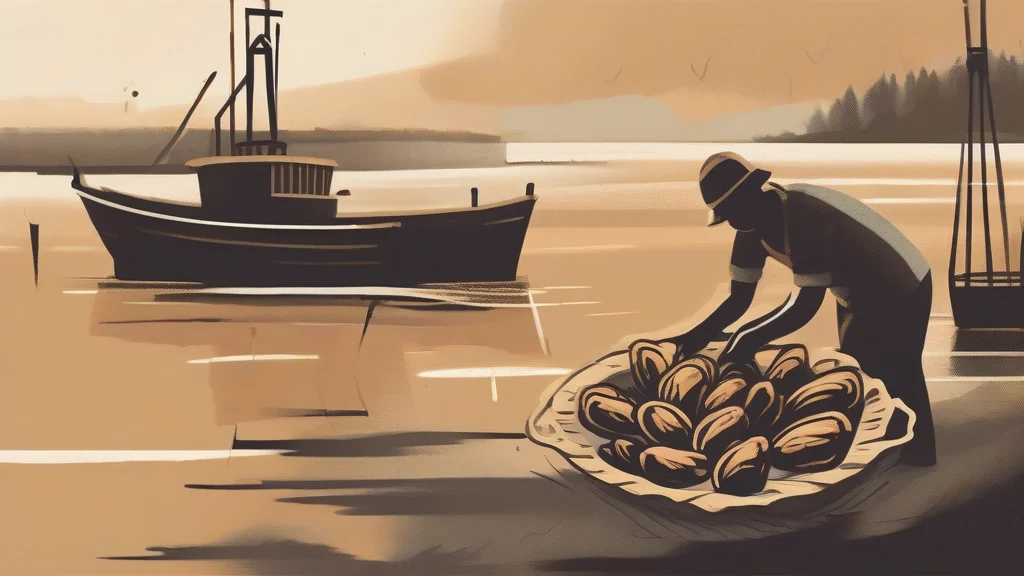
What does oystering mean?
Oystering is the activity of collecting oysters from coastal waters, particularly from naturally occurring beds or areas where commercial harvesting is permitted. It may describe either the practical work of taking oysters or the larger industry organized around harvesting, processing, and selling them. The term is especially associated with communities along the Atlantic and Gulf coasts of the United States, where oyster fishing has long supported coastal livelihoods. Historically, oystering was also important in parts of Britain. The word evokes traditional maritime work, including work aboard small boats, the use of specialized dredges and tongs, and the seasonal nature of the harvest. In modern usage, it most often appears in expressions such as oystering industry, oystering grounds, and oystering boats. Although closely related to shellfishing, which can include clams, mussels, and scallops as well, oystering specifically refers to the taking of oysters.
nounThe activity or business of gathering oysters from natural beds or designated waters. The term can also refer broadly to commercial oyster fishing.
- The activity of collecting oysters from coastal waters.
- The commercial oyster-fishing industry.
"For generations, families along the Chesapeake Bay made their living through oystering."
"Oystering begins shortly after the oyster season opens in the fall."
"The museum preserves the tools used by oystering families along the bay."
Oystering is ordinarily used as an uncountable noun for the activity or industry.
"Oystering remains part of the bay's traditional economy."
On the Chesapeake Bay, oystering became a central livelihood, supplying seafood and sustaining distinctive coastal communities.
Reviewed by Deb Chak, Editor. AI-assisted content curated by RJS Tech Solutions LLP.
Where does oystering come from?
Oystering was formed from the English word oyster with the suffix -ing. Oyster came through Old French oistre from Latin ostrea, which in turn derives from Greek ostreon, meaning oyster. The same inherited root also underlies words such as oystercatcher, oysterfish, and oysterbed. The harvesting term developed alongside the long-established coastal oyster trade and is particularly prominent in modern American English.
How oystering is actually used
The word is especially associated with the oyster industries of the United States Atlantic coast. It is often used with terms such as industry, boats, grounds, and vessels; when used for the broader shellfish trade, it is more precise than shellfishing.