
What does oystered mean?
Oystered is an uncommon but precise English word associated with oysters. As the past tense or past participle of the verb “oyster,” it means to furnish a dish or another food with oysters or to place oysters in or on it. It can also occur as an adjective: an “oystered” plate, platter, or dish is one that contains or is served with oysters. The word is fully understandable in British and American English, but it sounds literary or culinary rather than everyday; in most practical contexts, “served with oysters” or “topped with oysters” is more idiomatic. Oystered belongs to the long-established vocabulary of English cookery and food writing, in which the presence of an ingredient is often made explicit through a participial adjective. Because its form retains the familiar word oyster, it conveys both a process—adding oysters—and the resulting state—a dish containing them. That combination makes it useful when the focus is on the treatment or presentation of food rather than simply naming the shellfish.
To furnish with oysters, especially by adding or arranging them in or on food.
"The chef oystered the serving platter with freshly shucked oysters."
This is the past tense and past participle of “oyster” and is more characteristic of formal or culinary writing than everyday speech.
Containing, covered with, or served with oysters.
"The oystered platter arrived with lemon and horseradish."
Chiefly literary or culinary; “served with oysters” is more common in ordinary usage.
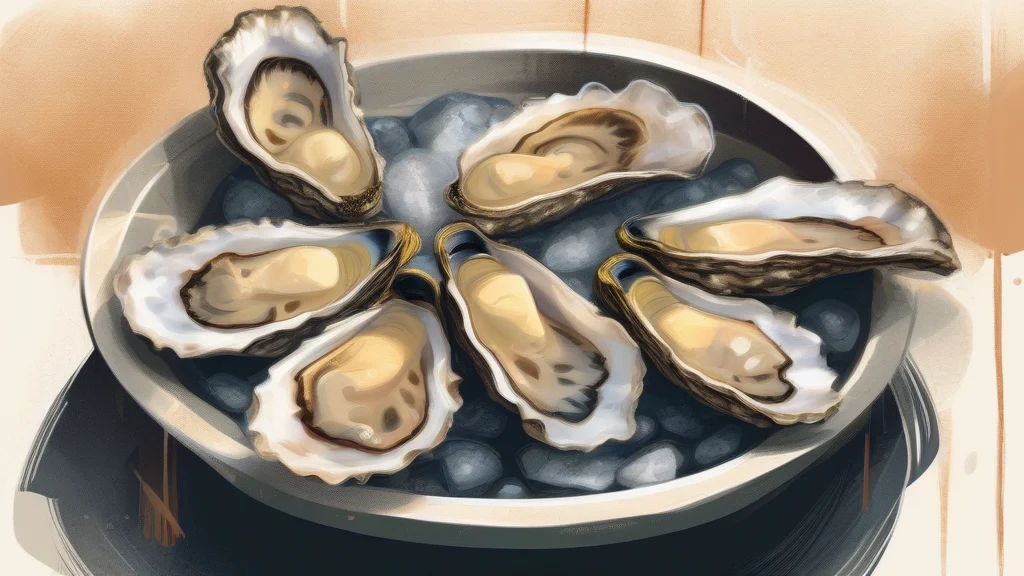
Add one syllable to oyster, and a shellfish becomes an act of hospitality: an oystered dish is one served with oysters.
Reviewed by Deb Chak, Editor. AI-assisted content curated by RJS Tech Solutions LLP.
Where does oystered come from?
Oystered was formed in English by adding the participial ending -ed to the verb “oyster.” Oyster came through Old French forms such as oistre and ostre from Latin ostrea, which was borrowed from Greek ostreōn, a word associated with osteōn, “bone,” in reference to the shell's hard shape. The ending therefore follows ordinary English word formation rather than representing a separate inherited root.
Related word forms
How oystered is actually used
The word is chiefly literary or culinary and sounds marked in ordinary conversation. Ordinary phrasing such as “served with oysters” or “topped with oysters” will usually sound more natural.