
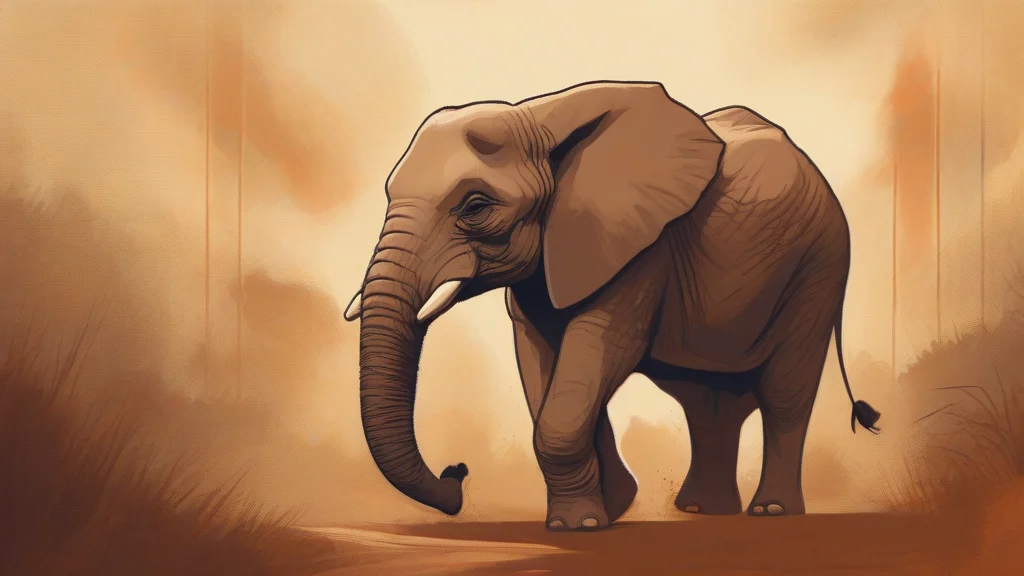
What does pachyderm mean?
A pachyderm is a thick-skinned mammal, most commonly an elephant. The word comes from Greek and literally refers to an animal with tough, substantial skin, but modern usage strongly favors the elephant as its principal referent. It can also be applied more generally to hippopotamuses, rhinoceroses, and other animals with notably thick skin. “Pachyderm” has a formal, literary, and somewhat old-fashioned quality, often appearing in descriptions of zoo animals, wildlife, or historical natural history. It may sound grandiose or mildly comic when used for an elephant, but it remains an apt and evocative term. Because it emphasizes the animal’s skin rather than its taxonomy or appearance, the word is especially useful in writing concerned with physical traits, zoological description, or memorable encounters with large animals.
nounA thick-skinned mammal, especially an elephant. The term can also refer more broadly to any animal with a thick, tough skin, such as the hippopotamus or rhinoceros.
- An elephant, especially in literary or historical contexts.
- Any thick-skinned mammal, including animals such as hippopotamuses and rhinoceroses.
"The oldest pachyderm at the sanctuary greeted the visitors with a gentle trumpet."
"The herd of pachyderms moved slowly across the dusty plain."
"In nineteenth-century natural history, the pachyderm was often used as a general term for large, thick-skinned mammals."
The standard plural is pachyderms; “pachydermata” is not a standard English plural in modern use.
"The two pachyderms shared a large pool at the conservation center."
Pachyderm comes from Greek words meaning “thick skin,” but today it most often means the elephant—an animal whose enormous ears and long trunk make its skin seem less like a defining feature than an afterthought.
Reviewed by Deb Chak, Editor. AI-assisted content curated by RJS Tech Solutions LLP.
Where does pachyderm come from?
The word comes from Greek pakys, meaning “thick” or “broad,” and derma, meaning “skin.” It entered English in the early nineteenth century as a zoological term for animals with thick skin. The modern elephant sense developed through literary and historical usage, while the broader zoological sense remains possible.
Related word forms
How pachyderm is actually used
The word is relatively formal and literary. Although it can refer broadly to any thick-skinned mammal, it most commonly evokes an elephant and may sound humorous or old-fashioned when used in ordinary conversation.