
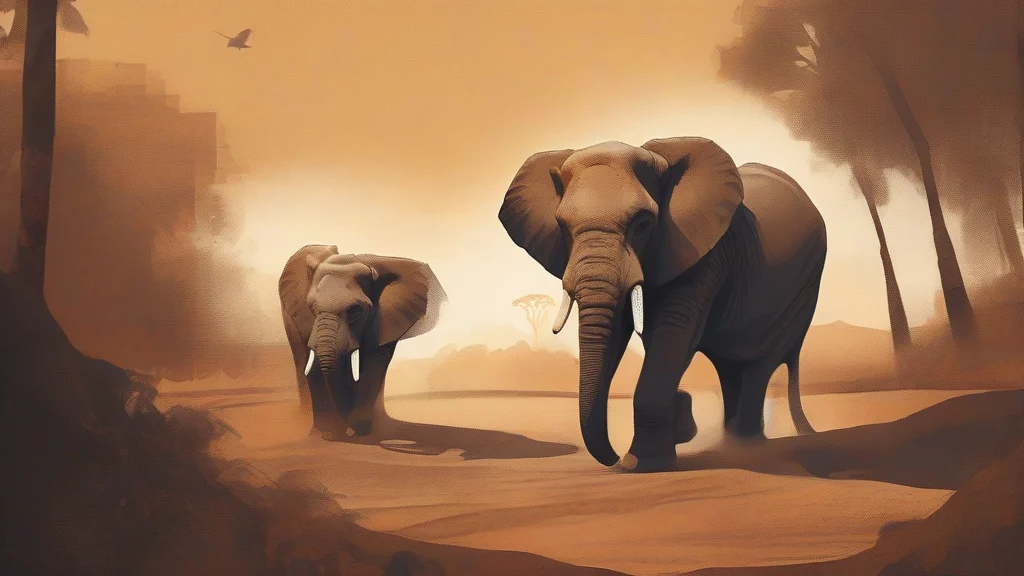
What does pachydermatous mean?
Pachydermatous is a formal adjective meaning “having thick skin,” most often used in zoology for animals whose skin is unusually tough or protective. In figurative use, it describes a person who is insensitive to criticism, hardship, or the feelings of others. The word is related to pachyderm, the standard term for an elephant and other thick-skinned mammals, and combines Greek elements meaning “thick” and “skin.” Although its literal meaning describes a physical feature, its figurative use has a distinctly negative connotation: it suggests that someone is not merely tough or resilient but unfeelingly indifferent. Because of its technical origins and elevated style, pachydermatous is more likely to appear in formal writing, specialist descriptions, or deliberate word choice than in ordinary conversation.
Having thick skin, especially as a zoological characteristic.
"The pachydermatous hide of the rhinoceros is exceptionally tough."
Chiefly used in formal or zoological contexts.
Figuratively, showing little sensitivity or concern for criticism, hardship, or others' feelings.
"His pachydermatous attitude made further discussion pointless."
A formal and strongly negative figurative use.
From the Greek words for “thick” and “skin,” pachydermatous literally means “thick-skinned”; in formal figurative use, it describes someone who seems indifferent to others’ feelings.
Reviewed by Deb Chak, Editor. AI-assisted content curated by RJS Tech Solutions LLP.
Where does pachydermatous come from?
The word was formed in the 19th century from Greek pakhus, meaning “thick,” and derma, meaning “skin.” Its literal sense follows from these elements, while its figurative sense developed by analogy with the thick skin of large animals. It is closely related to pachyderm, which comes from the same Greek roots and originally referred to an animal with thick skin.
How pachydermatous is actually used
The literal zoological sense is relatively uncommon and technical. The figurative sense is formal and strongly evaluative, often implying excessive callousness rather than merely being unaffected by physical pain.