
What does palaeontology mean?
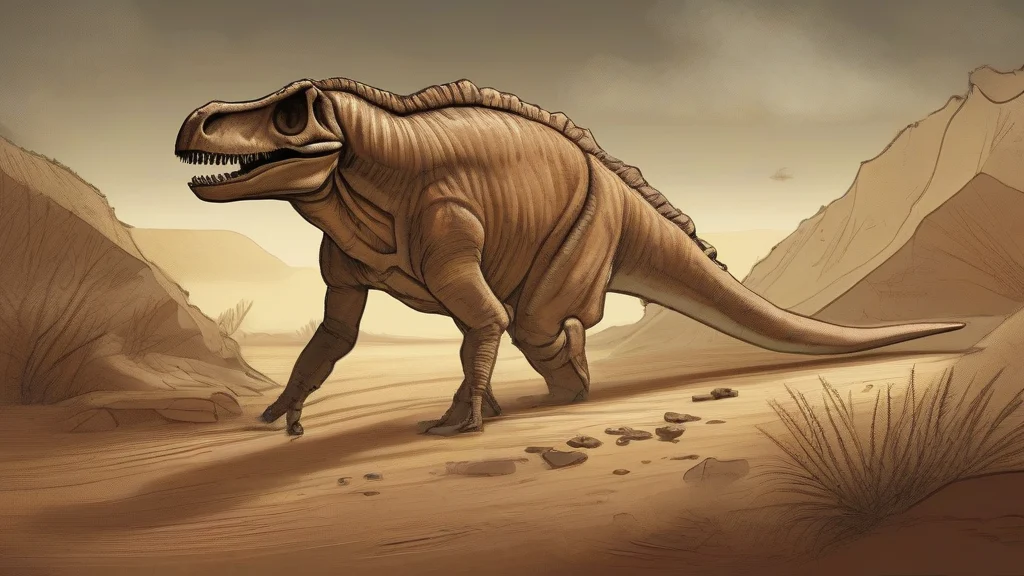
Palaeontology is the scientific study of fossils and ancient life. By examining preserved remains, impressions, and other traces of organisms, palaeontologists reconstruct how species lived, how ecosystems changed, and how life evolved over geological time. The field draws on biology, geology, chemistry, and related sciences, and it is especially important for understanding the history of animals and plants before written records. Fossils can reveal features such as anatomy, diet, movement, habitat, and evolutionary relationships, although the evidence is often incomplete and must be interpreted carefully. The word is also used more broadly to refer to research and discoveries in this field. A related scientific discipline, archaeology, focuses instead on past human cultures and activities. The spelling “paleontology” is standard in American English, whereas “palaeontology” is the usual British form.
nounThe branch of science concerned with the study of fossils and the history of ancient life. Palaeontologists use fossil evidence to reconstruct organisms, environments, and evolutionary processes from the distant past.
- The scientific study of fossils and ancient organisms, including the reconstruction of past environments and the evolution of life.
"The discovery of the fossil provided important evidence for the evolution of early birds."
"Palaeontology has transformed our understanding of how dinosaurs and their ecosystems evolved."
"Her research in vertebrate palaeontology focuses on the origins of early mammals."
Every fossil is a time capsule: palaeontology turns its stone and bone into a record of life millions of years ago.
Reviewed by Deb Chak, Editor. AI-assisted content curated by RJS Tech Solutions LLP.
Etymology of palaeontology
Palaeontology comes from the Greek palaíos, meaning “ancient,” and óntos, meaning “being” or “that which exists,” combined with the suffix -logía, meaning “study of.” The term was developed in the 19th century as scientists began systematically studying fossils as evidence of ancient life. Its components also appear in related words such as palaeography and palaeoecology, as well as in ontology, which concerns the nature of being.
Related word forms
How palaeontology is actually used
The word is formal and scientific. British English commonly uses the spelling “palaeontology,” while American English generally uses “paleontology”; both are pronounced similarly, with regional differences in the first vowel.
Easily confused with palaeontology
Palaeontology and paleontology are the same field in British and US spelling; palaeontology is the traditional British form, while paleontology is common in US usage.
Palaeontology studies fossils and ancient organisms, whereas archaeology primarily studies human activity and material remains from the past.