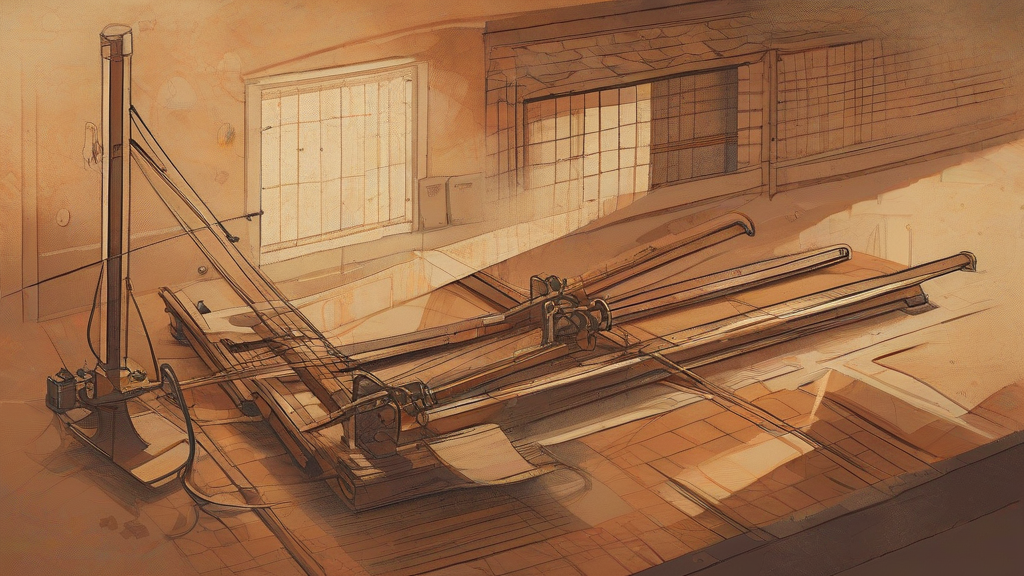
What does pantograph mean?
A pantograph is a mechanical device that transmits motion or shape from one point to another. It is commonly used in drafting, engineering, and art to enlarge or reduce drawings. The pantograph is a useful tool for creating detailed models or large-scale murals. It is also used in various hobbies and creative activities. The word pantograph has its roots in the Greek words 'pantos' meaning 'all' and 'graphos' meaning 'writing'. The pantograph has been used in various forms since the 17th century. It is a versatile device that has applications in many fields. The pantograph is a valuable tool for artists, engineers, and hobbyists alike. Its ability to transmit motion or shape makes it an essential device in many creative and technical pursuits.
A mechanical device that transmits motion or shape.
"The engineer used a pantograph to create a detailed model of the bridge."
Pantograph is often used in formal or technical contexts, such as engineering or art.
A device used in drafting and engineering to enlarge or reduce drawings.
"The artist used a pantograph to enlarge the small drawing and create a large-scale mural."
Pantograph can also be used in informal contexts, such as when referring to a device used in a hobby or creative activity.
The plural form pantographs is used when referring to multiple devices or when the device is being used in a collective sense.
"The artist used multiple pantographs to create a large-scale mural."
Reviewed by Deb Chak, Editor. AI-assisted content curated by RJS Tech Solutions LLP.
Etymology of pantograph
The word pantograph originated in the 17th century from the Greek words 'pantos' meaning 'all' and 'graphos' meaning 'writing'. The pantograph was initially used as a device for copying drawings and maps. Over time, the pantograph evolved to include various forms and applications. Today, the pantograph is used in a wide range of fields, including engineering, art, and hobbies.
How pantograph is actually used
Pantograph is often used in formal or technical contexts, such as engineering or art. It can also be used in informal contexts, such as when referring to a device used in a hobby or creative activity.