
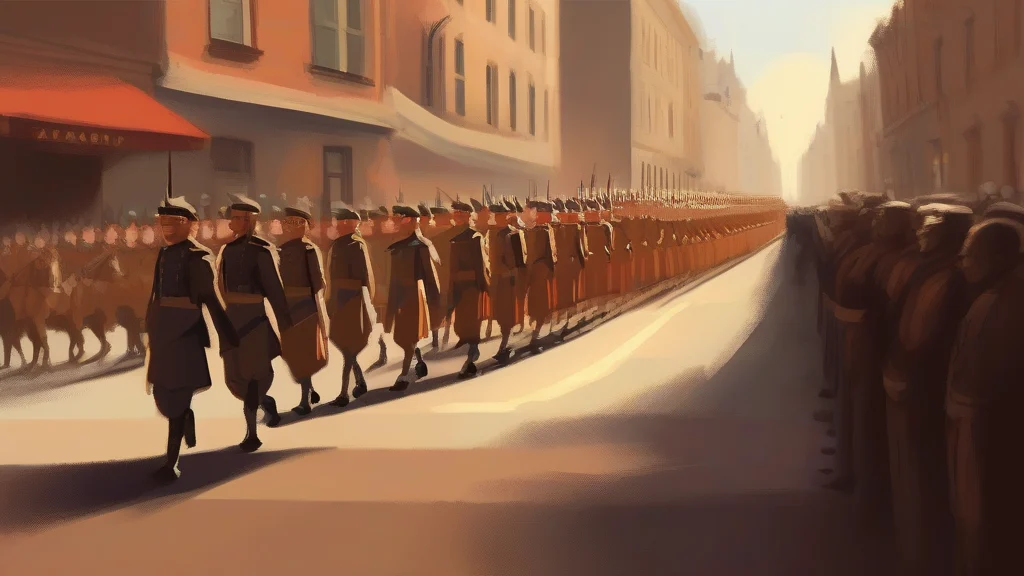
What does paraded mean?
“Paraded” is the past tense and past participle of “parade,” with two closely related uses. In its most literal sense, it means to march in an organized or ceremonial procession, as soldiers, bands, or celebrants might do along a public route. It can also mean to display, publicize, or present something in a conspicuous way, often with the implication of drawing attention to oneself or one’s achievements. That figurative use may be neutral, but it can sound critical when the display seems overly theatrical or self-promotional. The word is common in both British and American English and appears in reporting on parades, political campaigns, demonstrations, and public celebrations. “Paraded” is especially useful when a sentence needs both the factual idea of public display and the possible suggestion of deliberate showmanship. For example, troops may “parade through the streets” in an official ceremony, while a campaigner may “parade his achievements” before an audience. The contrast between these uses shows how a single word can move from describing orderly movement to commenting on conspicuous presentation.
verb (past tense and past participle)To march in an organized or ceremonial procession; to display or publicize something conspicuously, especially to attract attention.
- To march in an organized procession, especially as part of a ceremony or public celebration.
- To display, present, or publicize something conspicuously, often with the intention of attracting attention.
"The marching band paraded through the town square before the festival."
"The veterans paraded down Main Street during the commemoration."
"The candidate paraded her policy successes before a receptive crowd."
What began as an orderly military procession can now describe a public display so conspicuous that it seems almost theatrical.
Reviewed by Deb Chak, Editor. AI-assisted content curated by RJS Tech Solutions LLP.
Etymology of paraded
“Paraded” is the past tense and past participle of “parade.” The English verb came through French parader, while the related English noun came through French from Spanish paradas, from Italian parata. These forms ultimately trace to Latin parare, meaning “to set in order” or “arrange”; compare, prepare, repair, and parry also reach Latin parare through different historical paths.
Related word forms
How paraded is actually used
The literal sense is generally neutral to formal. The figurative sense can suggest deliberate showmanship and may carry a mildly critical or ironic tone when the display appears self-promotional.