
What does paramilitary mean?
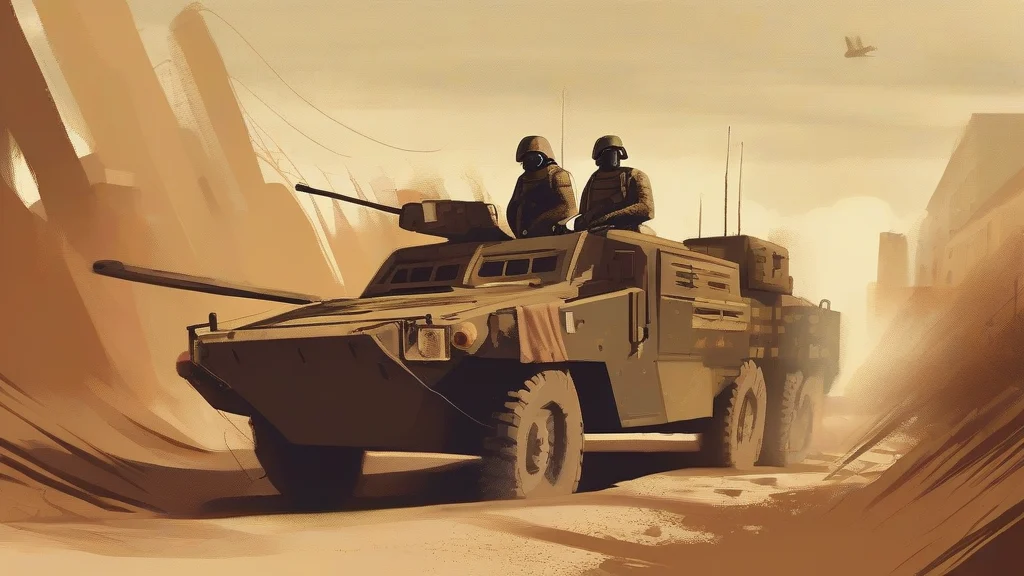
Paramilitary describes an organization or person that is organized and armed in a military-like way but does not belong to a state's regular armed forces. The word is especially common in reporting and discussion of armed non-state groups, militias, guerrillas, and similar organizations, although it can also refer to auxiliary or quasi-military formations. As an adjective, it commonly appears in phrases such as “paramilitary forces” and “paramilitary activity.” As a noun, it denotes a member of such an organization. The term often carries implications of contested authority, irregular warfare, or coercion, but these connotations depend on context. It is also used when discussing organizations that maintain military discipline and equipment while remaining formally separate from official armed forces.
Relating to or characteristic of an armed organization that resembles a military force but is not officially part of the regular armed forces.
"The report described the increasing presence of paramilitary groups in the region."
The adjective is frequently used with “forces,” “groups,” “organization,” and “activity.” Its application is sometimes politically sensitive.
A member of an armed organization that resembles a military force but is not officially part of the regular armed forces.
"The suspect was described as a former paramilitary operating along the border."
The plural is “paramilitaries.” In everyday use, it often refers to a member of a militia or other armed non-state organization.
The usual plural for people belonging to paramilitary organizations; the plural of a paramilitary group is commonly “groups” or “forces,” depending on context.
"Several alleged paramilitaries were questioned by investigators."
Paramilitary combines the idea of being alongside military forces with the forces themselves: it describes groups that often look and operate like an army without formally being one.
Reviewed by Deb Chak, Editor. AI-assisted content curated by RJS Tech Solutions LLP.
Where does paramilitary come from?
Paramilitary was formed in the 20th century by combining the prefix “para-” with “military.” The prefix comes from Greek and conveys a sense of alongside, beside, or beyond, while military ultimately derives from Latin words associated with soldiers and military service. The compound initially developed in contexts involving forces that were organized along military lines but stood apart from regular armies.
Related word forms
How paramilitary is actually used
The term is commonly used for non-state armed groups and for organizations with military structure that are outside regular state forces. It can be politically or morally loaded, depending on the context and the status of the group being described.
Easily confused with paramilitary
Military refers to armed forces officially connected with a state, whereas paramilitary commonly describes organizations or personnel that resemble military forces but are not part of the regular army, navy, or air force.
A militia is a local or organized body of citizens capable of military service, while paramilitary is a broader adjective and noun for military-style organizations outside the regular armed forces.