
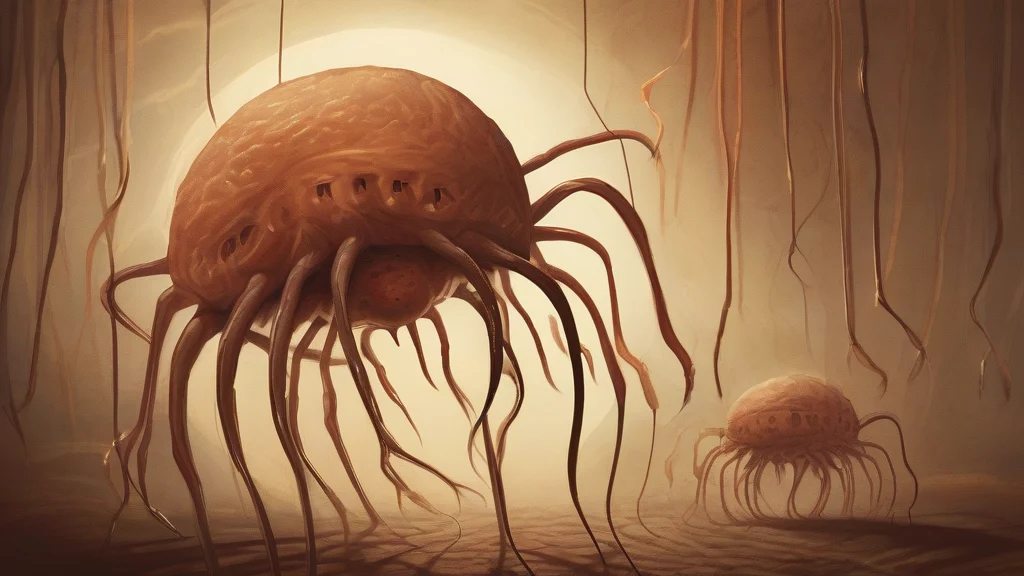
What does parasitism mean?
Parasitism is the biological condition in which one organism, called the parasite, benefits while another, called the host, is harmed. The parasite may obtain food, shelter, transport, or reproductive opportunities from the host, which can suffer reduced fitness or other damage. Parasitism differs from predation because the host is usually not killed immediately, allowing the parasite to continue feeding or reproduce. The term can also describe systems of exploitation in which one person, organization, or group profits at another’s expense. Related terms distinguish forms according to whether the parasite can complete its life cycle outside the host, whether it has one or several hosts, and whether it ultimately kills its host.
nounThe state or condition of being a parasite, especially the relationship between a parasite and its host. In biology, it refers to a form of symbiosis in which one organism benefits while the other is harmed.
- The biological relationship in which one organism, the parasite, benefits at the expense of another, the host.
"The study of parasitism examines how parasitic organisms obtain nutrients from their hosts without killing them immediately."
"The parasite illustrates the biological strategy of parasitism by feeding on a living host."
"The novel explores parasitism in human relationships, comparing emotional exploitation to a literal invasion."
Parasitism turns another organism into a meal, a shelter, or a ride—without asking permission.
Reviewed by Deb Chak, Editor. AI-assisted content curated by RJS Tech Solutions LLP.
Where does parasitism come from?
The word parasitism was formed in the 19th century from parasite and the suffix -ism, which forms nouns denoting a condition, practice, or distinctive way of being. The earlier word parasite comes through Latin from Greek parasitos, meaning “one who eats at another’s table,” and ultimately from a pre-Greek term associated with eating alongside or at another’s table. The same root also underlies parasitic, parasitology, and parasitoid.
How parasitism is actually used
In biology, parasitism specifically describes a relationship in which the parasite derives nutrients or other resources from the host while harming it. The term can also be used metaphorically for exploitative relationships, but that usage is generally figurative rather than technical.