
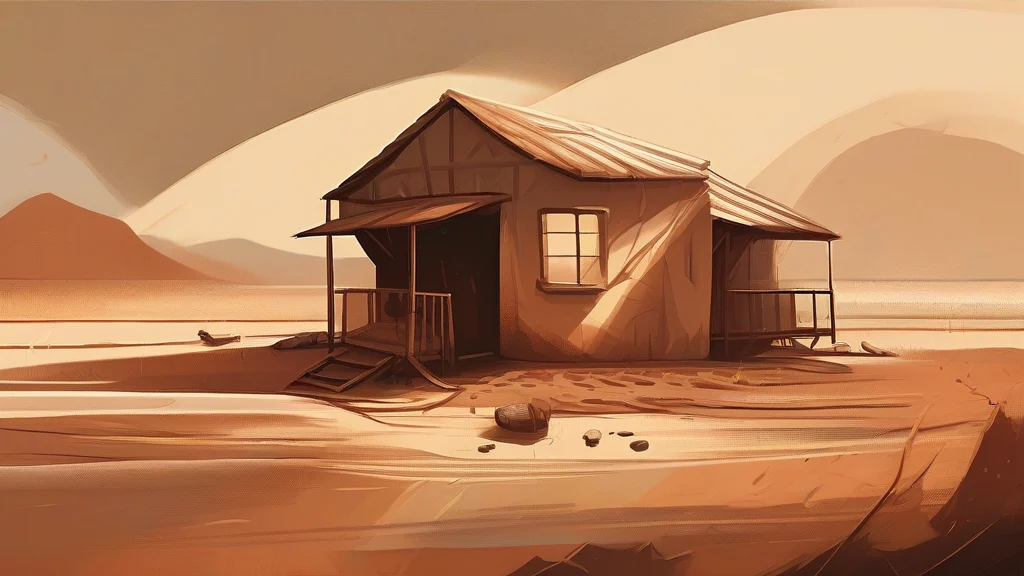
What does parching mean?
Parching describes the drying effect of intense heat, aridity, or thirst. A landscape may be described as parched when it has become hard, brown, and lifeless, while a person may feel parched when they are severely dehydrated. The word often appears in phrases such as “parching heat” and “parching thirst,” where it emphasizes severity and discomfort. Although it can be used literally for physical dryness, it is also used figuratively to suggest deprivation, desolation, or a desperate need for water. The present participle form is especially vivid in descriptive writing and is often more evocative than the simpler word “dry.” In a sentence such as “The blazing sun left the hillside parched,” the word conveys not only the absence of moisture but also the damaging, almost relentless nature of the heat.
To make something become dry or shriveled, especially through intense heat.
"The drought parched the fields and cracked the riverbed."
Often transitive, with the affected thing as the object, though it can also be used intransitively. It is commonly figurative as well as literal.
Extremely dry, hot, or thirsty; intensely parched.
"We reached the parched village after traveling through the desert."
Usually occurs in descriptive or figurative contexts, especially before words such as “heat,” “thirst,” or “land.”
A parching day can dry the ground in minutes, but the word also captures the equally fierce feeling of thirst that follows.
Reviewed by Deb Chak, Editor. AI-assisted content curated by RJS Tech Solutions LLP.
Etymology of parching
The word comes from Middle English “parchen,” a verb meaning “to dry” or “to parch.” It was borrowed from Old French “parcher,” which had a similar meaning. The exact ultimate origin of the Old French word is uncertain, so it is safest to understand the English word as having entered Middle English from French.
Related word forms
How parching is actually used
Generally figurative or descriptive rather than neutral. It is especially common in literary, journalistic, and poetic contexts, and it often conveys a harsh, extreme quality.
Easily confused with parching
Parching means drying or making extremely thirsty, whereas a perch is a fish, a bird's resting place, or a pole from which something hangs.
Parching is the process of becoming dry, while parchment is a prepared animal skin used as a writing surface.