
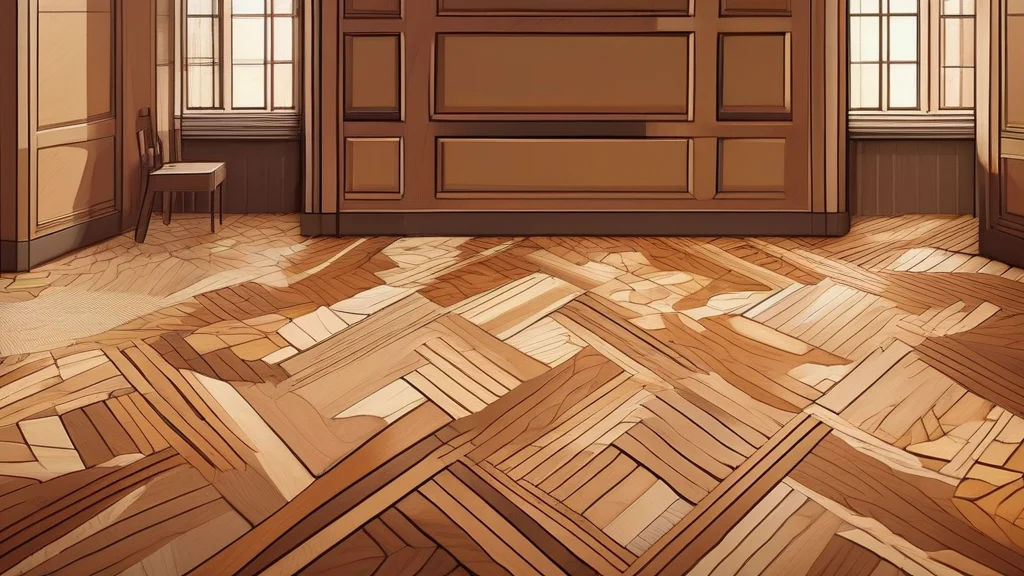
What does parquetry mean?
Parquetry is a form of decorative woodwork in which small pieces of wood, often veneers of contrasting colors and grains, are arranged in geometric or pictorial patterns. The technique was especially important in the production of elaborate floors, but it was also used to embellish furniture, cabinets, and other interior objects. In ordinary English, the word most often refers to richly patterned wooden flooring; more generally, it can denote the technique or the finished decorative work. A famous example is the parquet flooring associated with the Palace of Versailles. Parquetry should not be confused with parquet, which is a broader term for flooring assembled from wooden blocks or strips, nor with marquetry, which usually refers to ornamental inlay applied to furniture. The word is most common in discussions of architecture, furniture, restoration, and the decorative arts, where it conveys craftsmanship, luxury, and visual complexity.
nounWooden flooring or furniture decoration made by arranging small pieces of wood into a mosaic pattern. The technique is especially associated with geometric designs using contrasting wood veneers.
- The art or technique of making decorative patterns with small pieces of wood, usually as flooring or surface inlay.
- Wooden flooring decorated with contrasting pieces arranged in a mosaic design.
- The patterned wooden work itself.
"The hall's original parquetry was restored by a specialist in decorative woodwork."
"The palace has magnificent parquetry throughout its principal rooms."
"A craftsman used contrasting strips of oak and walnut to create the cabinet's parquetry."
Rarely used as a countable noun; the uncountable mass noun is more usual.
"The collection includes several fine parqueries made during the eighteenth century."
Parquetry turns ordinary wooden flooring into a geometric work of art—one reason richly patterned floors became symbols of luxury in European interiors.
Reviewed by Deb Chak, Editor. AI-assisted content curated by RJS Tech Solutions LLP.
Where does parquetry come from?
The word comes through French from parqueterie, meaning decorative wooden flooring or woodwork of this kind. Its deeper root is French parquet, meaning a wooden floor, from an Old French word based on perche, a beam or piece of wood. The related English word parquet originally referred to flooring made from shaped pieces of wood, while parquetry developed to emphasize the more elaborate decorative patterning.
How parquetry is actually used
The word is most often used in architectural, interior-design, conservation, and decorative-arts contexts. It is distinct from marquetry, which more commonly refers to pictorial or ornamental inlay on furniture and smaller objects.
Easily confused with parquetry
Parquet denotes flooring made from shaped wooden pieces, whereas parquetry specifically refers to the decorative mosaic technique and the patterned work it produces.
Parquetry is chiefly used for patterned wooden floors, while marquetry more often describes decorative pictorial or geometric inlay applied to furniture and other objects.