
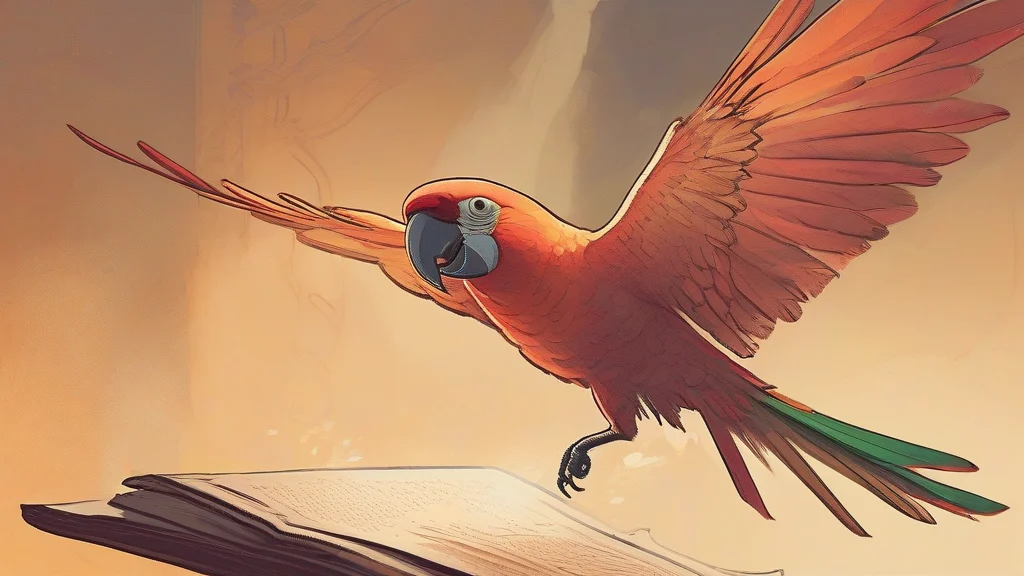
What does parroted mean?
Parroted is the past tense and past participle of parrot, a verb meaning to repeat words or speech mechanically, faithfully, or without showing independent understanding. The expression “to parrot someone” often implies that a person has repeated another person's claims, opinions, or instructions without critically evaluating them. It may also describe imitation more literally, as when a child or bird repeats a familiar phrase. In political and journalistic writing, “parroted” can suggest that several people or organizations are echoing the same messaging rather than independently producing it. The word comes from the bird, whose ability to imitate human speech inspired the verb's figurative use. Although it can describe accurate repetition, it is most commonly negative when applied to people and their remarks.
To repeat someone's words mechanically or unquestioningly, or to imitate someone's speech or behavior.
"Local representatives parroted the minister's announcement without adding any criticism."
The figurative use often implies uncritical repetition or imitation.
Repeated mechanically, faithfully, or without independent understanding.
"The report contained several parroted claims from press conferences."
This participial use is common in descriptions of statements, responses, and political messaging.
To parrot someone's words is to repeat them without adding your own thought.
Reviewed by Deb Chak, Editor. AI-assisted content curated by RJS Tech Solutions LLP.
Where does parroted come from?
The verb was formed from the noun parrot, with the regular past-tense ending -ed. The noun entered English through French in the 16th century, while the word's ultimate origin is uncertain. Its association with imitation arose from the bird's ability to reproduce human speech and other sounds.
Related word forms
How parroted is actually used
When used figuratively, the word often carries a negative connotation, suggesting blind repetition or uncritical agreement. The verb is especially common in journalism and discussion of politics, media, and public statements.