
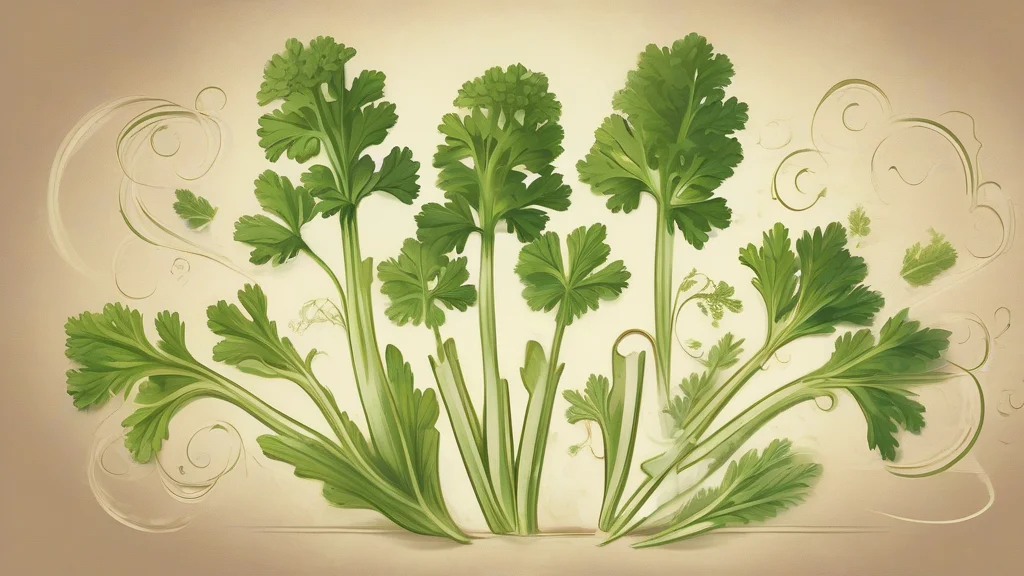
What does parsley mean?
Parsley is a common herb whose finely divided green leaves are used fresh in salads, sauces, soups, and as a decorative garnish. It has a mild, distinctive flavour that is often described as grassy, peppery, and slightly earthy, making it useful both for seasoning and for visual contrast on a plate. Curly parsley and flat-leaf parsley are the two forms most commonly encountered, although flat-leaf varieties are generally regarded as having a stronger flavour. The herb is associated especially with European and Mediterranean cooking, but it is now used internationally. In Britain, the word coriander may refer to the herb or to its leaves depending on context, while cilantro is more widespread in North American usage for the same fresh leaves. Parsley also has a long history of traditional medicinal and aromatic uses, although its principal modern role is culinary. Because it retains its colour and flavour better than many delicate herbs, it is frequently added at the end of cooking or used immediately before serving.
nounA small herbaceous plant with divided green leaves and a distinctive flavour, widely used as a garnish and ingredient in cooking. The fresh leaves are also known as parsley.
- A culinary herb and garnish made from the leaves of Petroselinum crispum.
- The flowering plant from which this herb is obtained.
"She sprinkled freshly chopped parsley over the finished soup."
"The recipe calls for parsley, garlic, and a little lemon zest."
"A bed of parsley surrounded the central sculpture at the exhibition."
Parsley is normally a mass noun and has no regular plural. “Parsleys” is occasionally used in specialised contexts, but “some parsley” or “a bunch of parsley” is standard.
"The cook added parsley, mint, and coriander to the salad."
The name parsley once carried a surprising promise: it was believed to help keep a person's breath fresh.
Reviewed by Deb Chak, Editor. AI-assisted content curated by RJS Tech Solutions LLP.
Where does parsley come from?
The English word comes from Old English pærsley, borrowed through medieval Latin from Greek petroselinon, a compound of petros, meaning “rock,” and selinon, meaning “celery” or “parsley.” The name referred to a plant associated with rocky ground and was ultimately related to celery. The modern botanical name Petroselinum preserves this ancient Greek association with rock celery.
How parsley is actually used
The leaves are often treated as a mass noun, so the usual wording is “a handful of parsley” or “some parsley,” rather than “a parsley.” In British usage, coriander generally names the plant, while its leaves are called coriander leaves; elsewhere, cilantro commonly refers to both the plant and its leaves. Parsley is more strongly associated with European and Mediterranean cooking, and its flavour is commonly described as bright, grassy, and slightly peppery.
Easily confused with parsley
Cilantro usually refers to the leaves and stems of coriander, whereas parsley comes from a different plant, although both are commonly called coriander in parts of Britain and other regions.