
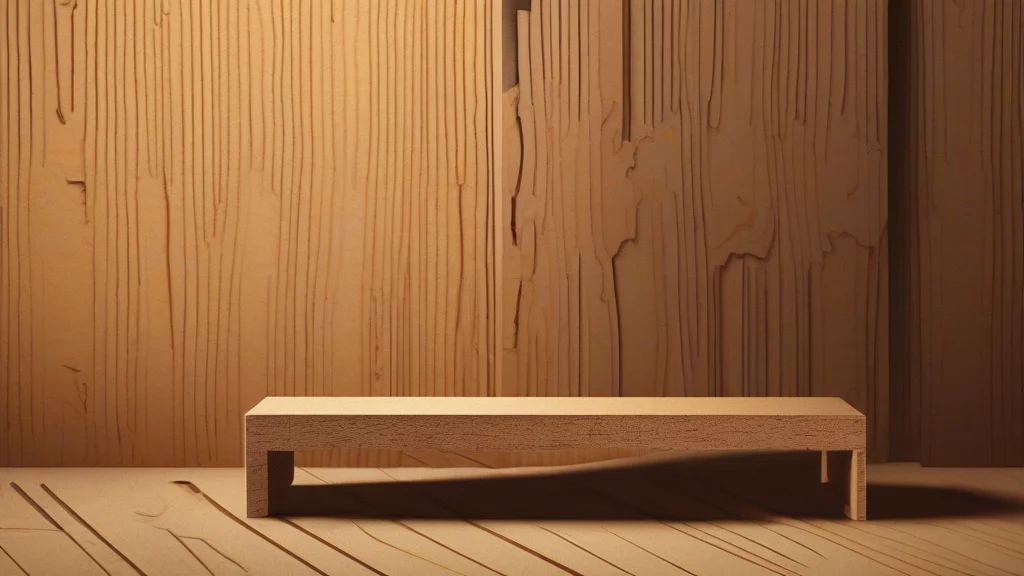
What does particleboard mean?
Particleboard is an engineered wood product made by combining small pieces of wood, including chips, shavings, and sawdust, with adhesive and pressing the mixture into a flat panel. It became widely used because it is inexpensive, uniform, and easy to cut, making it common in shelves, cupboards, desks, flat-pack furniture, and interior wall panels. Unlike solid wood, particleboard has no continuous grain, so its edges and surface can appear smooth and consistent, but it is generally more vulnerable to moisture and heavy weight than plywood or solid timber. The material is also commonly faced with veneers, laminate, or melamine to improve its appearance and durability. Although the word sometimes carries a negative association when someone informally attributes cheap furniture to it, particleboard itself is a precise and widely used building-material term.
nounA manufactured building material made by bonding wood particles, such as chips, shavings, and sawdust, with adhesive under heat and pressure. It is commonly used for furniture, shelving, cabinetry, and interior panels.
- A manufactured panel made by bonding wood particles with adhesive.
"The inexpensive bookcase was made from laminated particleboard."
"The workshop was lined with plain particleboard, ready to be painted."
"The moisture caused the particleboard shelf to swell and deteriorate."
The plural is uncommon because particleboard is normally treated as a material or mass noun, but it can be used for separate panels.
"The damaged particleboards were replaced before the shop reopened."
Particleboard turns the small chips, shavings, and sawdust left from wood processing into a smooth, inexpensive sheet.
Reviewed by Deb Chak, Editor. AI-assisted content curated by RJS Tech Solutions LLP.
Where does particleboard come from?
Particleboard is a compound of particle and board, both of which entered English during the medieval period. Particle comes through Old French from Latin particula, a diminutive of pars, meaning “part,” while board comes from Old English bord, originally referring to a plank or strip of wood. The compound name reflects the board’s manufacture from small pieces or particles of wood rather than from a single piece of timber.
How particleboard is actually used
Particleboard is standard technical and everyday vocabulary in both British and American English, though chipboard is especially common in British usage for this material. The term can sound disparaging when used informally to describe cheap or poorly made furniture. It is normally treated as a mass noun, although the plural particleboards is used when referring to individual panels.
Easily confused with particleboard
Particleboard is formed from bonded wood particles, whereas plywood consists of thin layers of wood veneer pressed together.
Particleboard uses relatively coarse wood particles, while medium-density fiberboard is made from wood fibers pulped into a smoother, denser material.
Particleboard uses small particles bonded together, while oriented strand board uses larger wood strands arranged in visible layers.