
What does pasty mean?
Pasty is a word with several related uses. As a noun, it refers to a pie or parcel of pastry enclosing a filling, with meat-and-vegetable varieties traditionally associated especially with British and Cornish food. As an adjective, a person who is pasty has an unusually pale, sallow complexion, often suggesting illness, nervousness, or poor health. The verb “to go pasty” describes becoming pale, as might happen through shock, fear, or physical weakness. The culinary noun is generally the most familiar in British English, while the colour-related adjective and verb sound somewhat dated but remain idiomatic. Although the noun and adjective meanings look unrelated at first, both ultimately connect with the older idea of dough or paste: the pastry of a pie gives the food its name, while the pale, doughy appearance of someone who is ill lies behind the figurative sense.
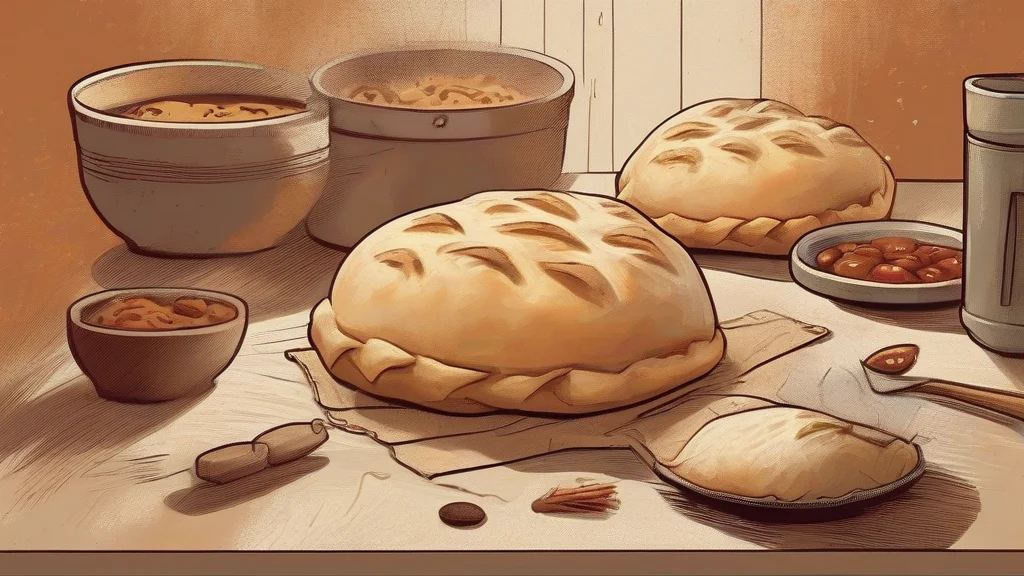
A pie or parcel made by enclosing a filling, often meat, potatoes, and vegetables, in pastry.
"They ate a warm pasty while walking along the coast."
Especially common in British English; a Cornish pasty is a traditional regional variety.
Pale or sallow in complexion, especially in a way suggesting illness or lack of vitality.
"He looked pasty and exhausted after the long journey."
Often negative, but it can also be used playfully to describe an extremely pale face.
To become pale, especially because of illness, shock, or anxiety.
"Her face went pasty as she read the message."
More common in British English and in older or literary usage than in contemporary American English.
The standard plural of the noun is “pasties,” with the same pronunciation and spelling apart from the added “-s.”
"The shop sells dozens of pasties during the festival."
A pasty can be a satisfying meal, while a person described as pasty is as pale as uncooked pastry.
Reviewed by Deb Chak, Editor. AI-assisted content curated by RJS Tech Solutions LLP.
Where does pasty come from?
The word comes through Middle English from “paste,” meaning a soft mixture or dough, with the suffix “-y.” The culinary sense developed as a shortened form referring to a filled parcel of pastry. The adjective and verb meanings relating to paleness come from the appearance of dough and paste, which is pale and doughy. The related words “paste,” “pastry,” and “pasta” reflect the same broad Latin tradition associated with “pasta,” a word originally referring to dough or paste.
Related word forms
How pasty is actually used
The noun is especially common in British English. The adjective and verb are less frequent today but remain understood; the adjective often carries a negative connotation of ill health, though it can also be used humorously to describe a very pale complexion.
Easily confused with pasty
A paste is a soft, spreadable substance or mixture, whereas a pasty is a pie made by enclosing a filling in pastry.