
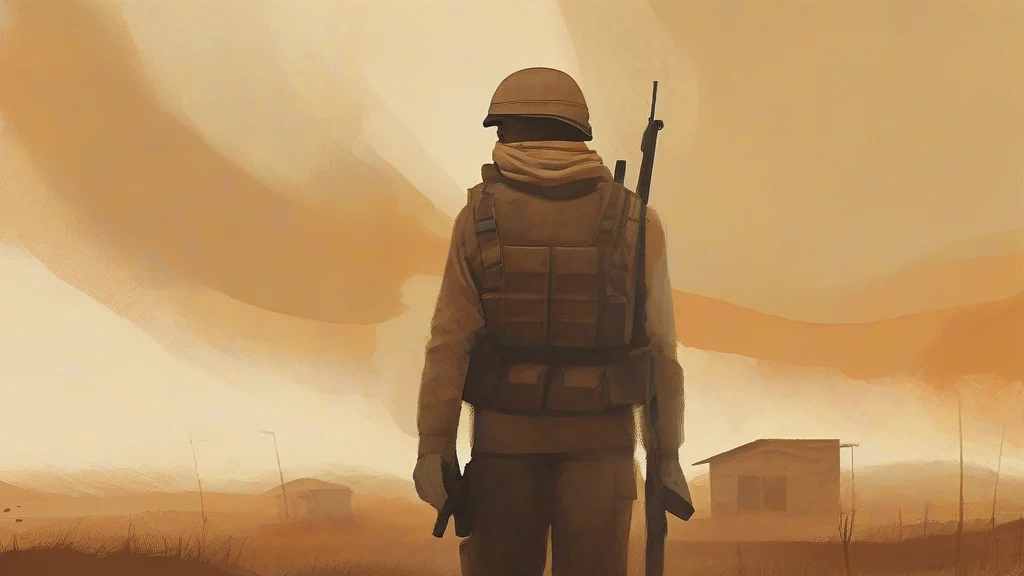
What does peacekeeper mean?
A peacekeeper is a person or force assigned to preserve peace, usually in a conflict zone or along a fragile ceasefire. Their work may involve monitoring agreements, patrolling dangerous areas, protecting civilians, and helping prevent a return to fighting. The term became especially prominent through United Nations missions, although peacekeepers can also be sent by national governments, regional organizations, or other international bodies. A peacekeeper does not necessarily create peace from the beginning of a conflict; the role is commonly to support and maintain an existing settlement. This distinguishes the word from a peacemaker, whose primary task is to negotiate or bring opposing parties toward agreement. Peacekeeping is often delicate work conducted under difficult and sometimes dangerous conditions, and it may involve military personnel, police, observers, or civilians serving in a support capacity.
nounA person, especially a member of a military or international force, sent to maintain peace, often by monitoring a ceasefire or preventing renewed violence. The term can also refer to an organization or country whose role is to help preserve peace.
- A person or force assigned to preserve peace, monitor an agreement, or prevent further violence.
- A country, organization, or institution whose function is to support peace and stability.
"The United Nations deployed a peacekeeper to monitor the ceasefire."
"The peacekeeper spent the night recording activity near the border."
"Several countries have contributed personnel to the international peacekeeping mission."
The plural is used for individual personnel or, collectively, for a body of deployed peacekeepers.
"The peacekeepers met with local leaders to discuss the security situation."
Peacekeepers are sent to preserve ceasefires, so their presence can signal that a conflict has stopped short of becoming a full peace.
Reviewed by Deb Chak, Editor. AI-assisted content curated by RJS Tech Solutions LLP.
Where does peacekeeper come from?
The word combines peace, from Old French pais and ultimately Latin pax, with the Germanic word keep, meaning to guard or hold. The combination developed in the modern period alongside the growth of organized international efforts to monitor ceasefires and prevent renewed conflict. Its related forms peacekeeping and peacekept are also modern formations. The peace element has cognates in words such as pacify, pacific, and pacifist, all associated with the Latin family of pax.
Related word forms
How peacekeeper is actually used
The term is most commonly used in the context of international or military conflict. It generally implies monitoring or protecting an existing agreement rather than creating peace by negotiation. In formal diplomatic and United Nations contexts, peacekeeping often refers to organized operations, forces, or missions.
Easily confused with peacekeeper
A peacekeeper helps maintain an existing peace or ceasefire, whereas a peacemaker works to resolve a dispute or bring parties to an agreement.