
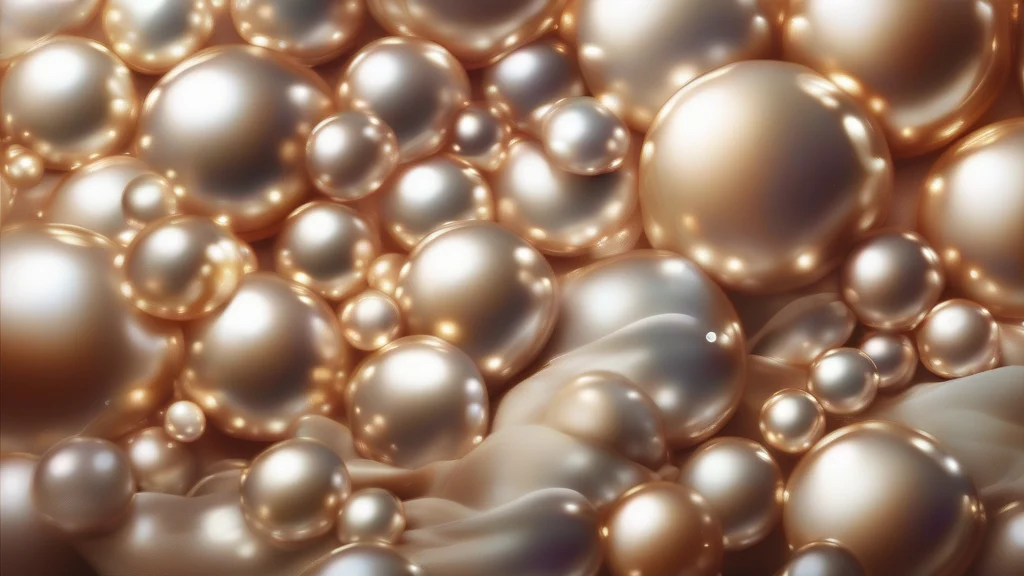
What does pearly mean?
“Pearly” describes a soft, luminous quality associated with the appearance of a pearl. It is especially common in the expression “pearly white,” where it suggests a delicate whiteness with a subtle sheen, as in pearly teeth, clouds, or moonlight. The word can also convey an iridescent or opalescent beauty, describing objects whose surface reflects light in a way reminiscent of a pearl. In literary and religious contexts, “pearly gates” refers to an imagined entrance to heaven. Although “pearly” sometimes conveys a slightly old-fashioned or poetic tone, it remains natural in descriptive prose. It is related to “pearl” and combines that noun with the suffix “-y,” meaning “like” or “characterized by.”
Shining like a pearl, especially white or softly luminous; resembling a pearl in colour or appearance.
"The glass had a pearly finish that shifted in the light."
Common in descriptive and literary contexts; “pearly white” is the most established collocation.
In a pearly manner, especially with a soft white or luminous appearance.
"The moon shone pearly through the thin clouds."
Less common than the adjective and chiefly used in descriptive or literary writing.
The phrase “pearly gates” gives the word an enduring association with heaven, while its ordinary use captures the soft, luminous beauty of a pearl.
Reviewed by Deb Chak, Editor. AI-assisted content curated by RJS Tech Solutions LLP.
Where does pearly come from?
“Pearly” was formed in English from “pearl” and the suffix “-y.” “Pearl” itself comes through Old French “perle” from Old English “perle,” a Germanic borrowing that ultimately reflects a wider European word family associated with a precious nacreous object. The derived adjective developed the sense “resembling a pearl” and especially the familiar expression “pearly white.” Related forms include “pearlfish” and “pearlware,” both reflecting the same central meaning.
How pearly is actually used
The adjective is common in literary and descriptive writing. “Pearly white” is especially frequent, while “pearly gates” is a familiar literary or biblical expression.
Easily confused with pearly
“Pearly” describes a soft, luminous or pearl-like appearance, whereas “pale” primarily means lacking colour or intensity, as in a pale face or pale blue.