
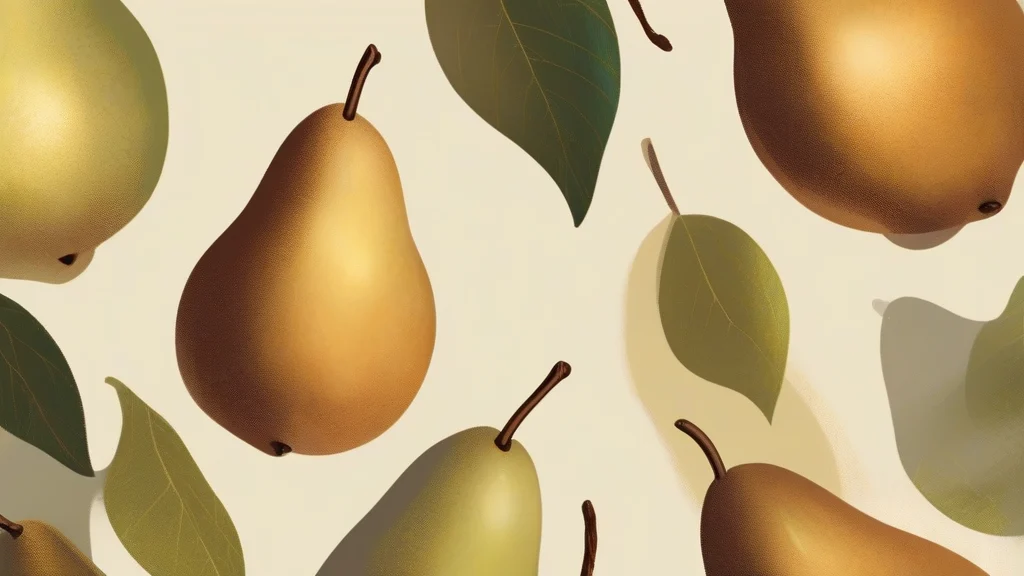
What does pear mean?
A pear is a sweet, fleshy fruit with a soft or crisp texture, a central core, and usually small seeds. The word also refers to the tree that produces pears, a deciduous tree with simple leaves and white or pink flowers. Pears are commonly eaten fresh, baked, poached, or dried, and they are used to make products such as cider and purée. In British English, “pear” is often pronounced with a non-rhotic sound, while many American speakers use a rhotic pronunciation. The word can therefore be confused in speech with “pair,” but its meaning and grammatical use are quite different. Although “pear” is a familiar everyday term, it belongs to a large and diverse group of cultivated varieties, ranging from small European pears to larger Asian pears. Its long history and many uses make it a useful word for discussing food, horticulture, and fruit cultivation.
nounA typically sweet, fleshy fruit with a juicy interior and a central core, often containing small seeds. The word can also refer to the deciduous tree that bears this fruit.
- The edible fruit of the pear tree, usually having a bell-shaped or rounded form and a juicy, sweet flesh.
- The deciduous tree that produces pears, with broad leaves and white or pale pink blossoms.
"She sliced a ripe pear and arranged the pieces over a bowl of fresh fruit."
"The bakery sells rustic bread, pastries, and slices of ripe pear."
"The old pear tree in the garden still produces an excellent harvest every autumn."
Use “pears” for multiple fruits or trees; the singular form can also be used attributively, as in “pear tree.”
"The farmers grow several varieties of pears in the orchard."
From the Latin pirum to the English pear, this humble fruit has furnished both the common word and the drinks and varieties that surround it.
Reviewed by Deb Chak, Editor. AI-assisted content curated by RJS Tech Solutions LLP.
Where does pear come from?
The English word “pear” comes from Old English pere, which was borrowed from Latin pirum. The Latin word continued into several Romance languages, producing cognates such as French poire, Italian and Spanish pera, and Portuguese pêra. These forms all preserve the same basic Latin fruit name, although their later pronunciations and spelling reflect the development of the individual languages.
Related word forms
How pear is actually used
When referring to the fruit, “pear” is normally countable: “a pear,” “two pears,” or “a bowl of pears.” The same spelling also names the tree, so the intended meaning may depend on context.
Easily confused with pear
A pear is a fruit or fruit tree, whereas a pair consists of two people or things considered as a unit.