
What does penne mean?
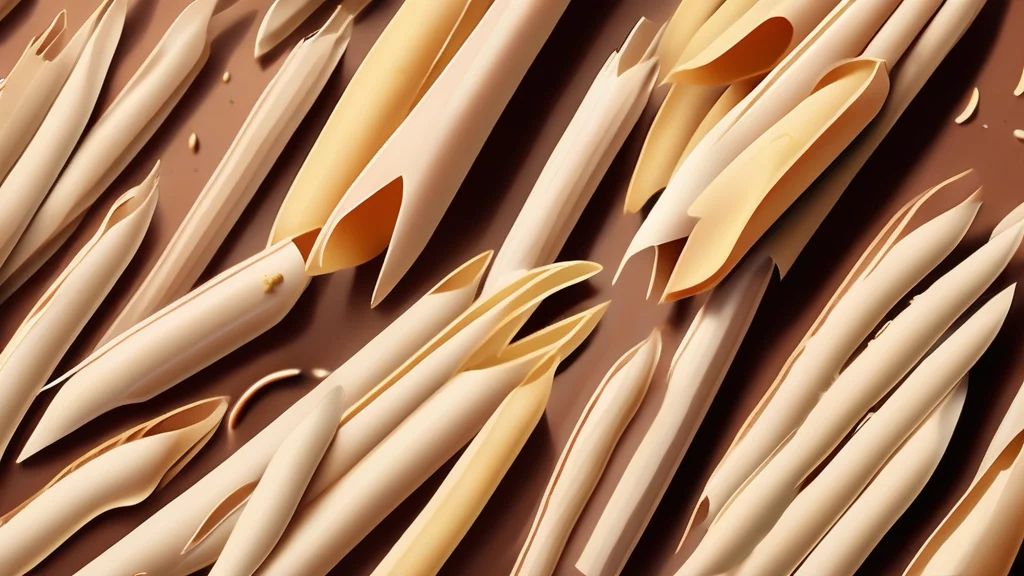
Penne is a tubular form of Italian pasta whose ends are cut at an angle, giving each piece a quill-like appearance. It is commonly served with tomato-based or creamy sauces, pesto, cheese, and ingredients such as vegetables or meat. In English, penne usually functions as an uncountable noun: a serving is described as a bowl, plate, order, or packet of penne, rather than using a regular plural. Although the name can suggest any tubular pasta, it specifically identifies pasta that has been cut diagonally, distinguishing it from straight-cut, ridged varieties such as rigatoni. Penne is especially popular in Italian-American cuisine, where it appears in dishes such as penne with vodka sauce and baked penne with mozzarella. The word entered widespread English use as part of the adoption of Italian food terminology and retains the pronunciation of its language of origin.
nounAn Italian pasta consisting of short pieces of hollow cylindrical pasta, usually cut diagonally at an angle. The name refers to its quill-like shape.
- Short, hollow pieces of pasta shaped like narrow tubes and cut diagonally at both ends.
"We ordered penne with roasted vegetables and tomato sauce."
"The café serves penne with basil pesto and grilled chicken."
"For a quick dinner, I heated a packet of penne and added a jar of tomato sauce."
Penne is generally an uncountable mass noun and normally has no plural form.
"They ordered two bowls of penne."
The name penne comes from Italian words meaning “quills,” an apt description of the pasta's hollow, angled shape.
Reviewed by Deb Chak, Editor. AI-assisted content curated by RJS Tech Solutions LLP.
Where does penne come from?
The word comes from Italian, where penne is the plural of penna, meaning “pen,” “quill,” or “feather.” Italian penna ultimately derives from Latin penna, an ancient source of several English words concerning feathers, quills, and related objects. The pasta was named for its resemblance to a quill or feather, and the Italian plural form became the established name of the pasta in English.
How penne is actually used
In English, penne is commonly treated as an uncountable mass noun when referring to the pasta itself. It is also used attributively, as in “penne pasta.”
Easily confused with penne
Penne tubes are cut diagonally and have a smooth surface, whereas rigatoni are cut straight across and have ridged sides.