
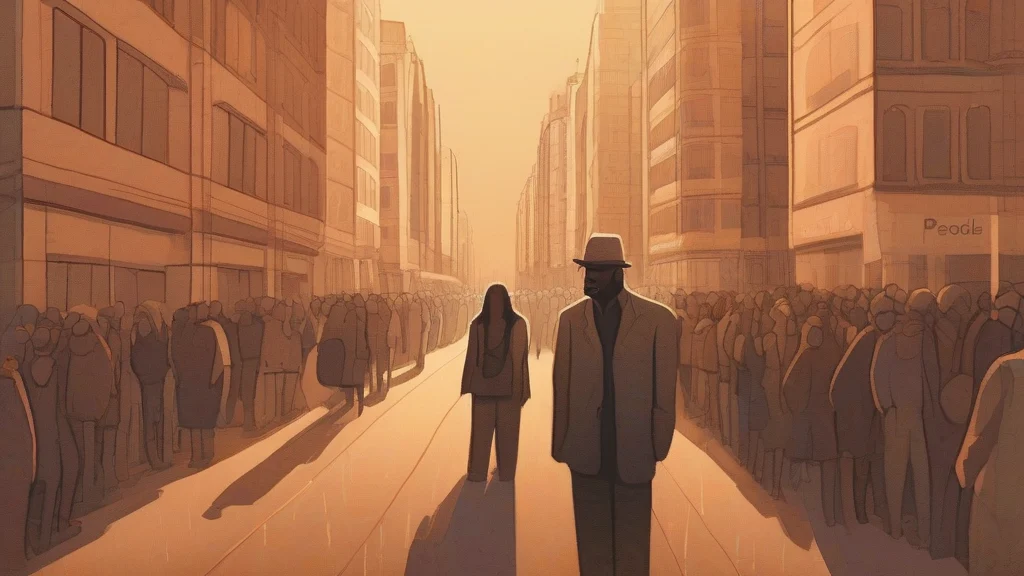
What does peopled mean?
“Peopled” is an adjective meaning that a place, building, or area contains people or other inhabitants. It is often used with qualifiers such as “densely,” “heavily,” or “sparsely,” describing how extensively an area is occupied. In more literary contexts, the word can also mean filled with a particular kind of person, animal, or thing: a forest may be peopled with birds, or a memory may be peopled with faces. The word can additionally function as the past tense and past participle of the older verb “people,” meaning to furnish with inhabitants or to inhabit. Because “peopled” is more expressive than the plainer “populated,” it often gives a passage a descriptive, narrative, or slightly formal tone, though it is fully standard in modern English.
Having inhabitants; occupied by people or a particular kind of people or creature.
"The valley is peopled by farmers and their families."
Common in descriptive and literary English, especially in phrases describing the density of population.
Past tense and past participle of the verb “people,” meaning to populate or inhabit.
"The island was peopled by settlers from the mainland."
This use is now literary or archaic; “populated” is more usual in contemporary formal prose.
“Peopled” can describe a place crowded with people—or, in literary English, a landscape filled with animals, stars, or memories.
Reviewed by Deb Chak, Editor. AI-assisted content curated by RJS Tech Solutions LLP.
Where does peopled come from?
The word comes ultimately from Old English “people,” meaning inhabitants or a population, which was borrowed from Latin “populus,” meaning the people or populace. The modern adjective “peopled” developed from this noun, while the related verb “people” continued the older sense of filling or inhabiting a place. “Populate,” “population,” and “populous” also descend from the same Latin root through Old French.
Related word forms
How peopled is actually used
As an adjective, “peopled” is especially common in formal or literary descriptions, including “densely peopled,” “heavily peopled,” and “sparsely peopled.” The verb form is now largely literary or archaic.
Easily confused with peopled
“Peopled” describes an area or place as having inhabitants, while “populated” most commonly describes the act of supplying an area with people or, in technical contexts, with data.