
What does perching mean?
“Perching” means sitting or standing on a narrow or elevated support, most often in reference to a bird resting on a branch, fence, or wire. The word is commonly encountered in descriptions of birds and other animals and can be used either as a verb form, as in “the owl is perching on the roof,” or as an adjective, as in “a perching bird.” Its connotation is quiet and stationary: a perching animal is resting, balancing, or surveying its surroundings rather than moving through the air or feeding actively. The word is useful in wildlife writing, nature descriptions, and precise accounts of animal behavior, while its straightforward British and US usage makes it widely understandable.
To sit or stand on a narrow or elevated support, especially as a bird does.
"The hawk is perching on the telephone wire."
Often used in the present participle, including with progressive forms such as “is perching.”
That habitually sits or stands on an elevated support.
"A perching bird called from the bare branch."
Usually appears in compounds or descriptive phrases such as “perching bird,” “perching songbird,” or “perching insect.”
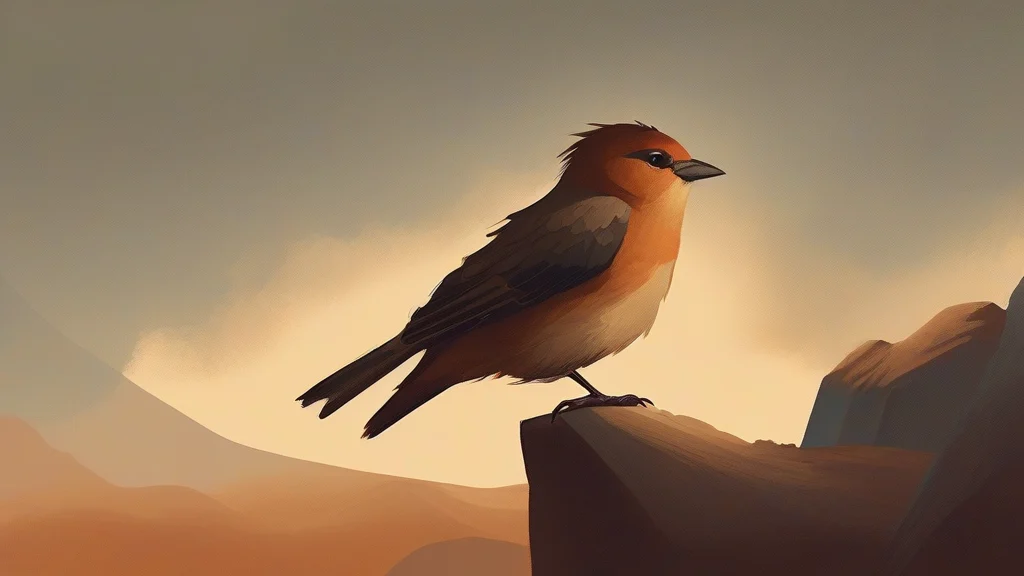
Perching is a bird's everyday balancing act: it is how many species rest, survey their surroundings, and prepare for flight.
Reviewed by Deb Chak, Editor. AI-assisted content curated by RJS Tech Solutions LLP.
Where does perching come from?
The word comes from the English verb “perch,” which has roots in Old French “perche.” That French word was borrowed from Latin “pertica,” meaning a pole or stake, reflecting the original sense of a bird or person sitting on a raised support. The related forms “perches” and “perched” preserve the same Germanic and Romance inheritance, while “perching” is the modern English present participle and gerund of the verb.
Related word forms
How perching is actually used
As a verb form, “perching” usually occurs with the present participle or as a gerund: “The bird is perching on the fence.” In the adjectival use “perching bird,” it describes an animal that commonly rests on branches, posts, or other supports.