
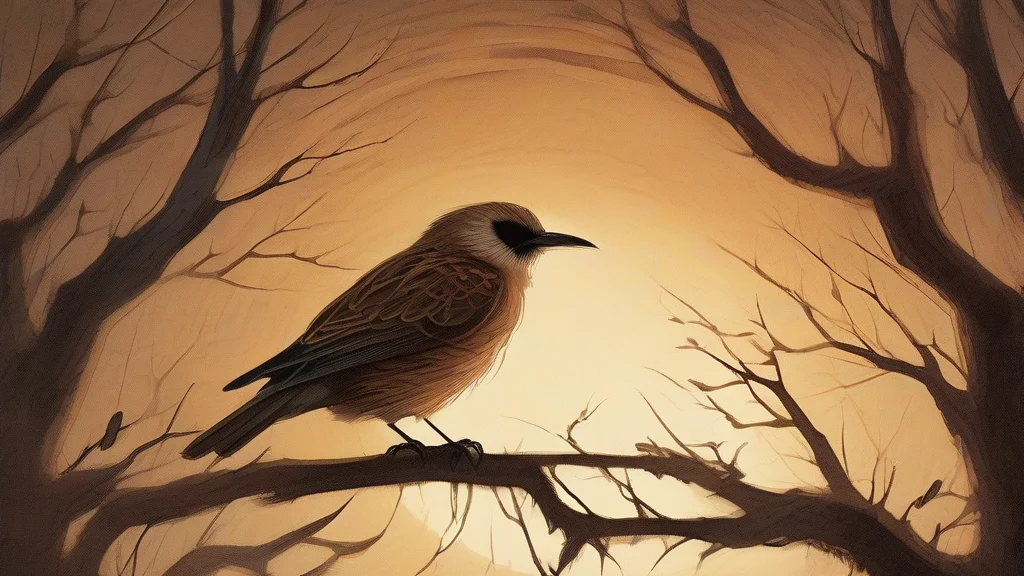
What does roosting mean?
Roosting most commonly describes a bird or other animal settling at a roost, usually to rest or spend the night. It can also be used figuratively for people staying somewhere temporarily, often with a humorous suggestion that the destination is a regular home, resting place, or bedtime refuge. The related noun refers to the act or habit of doing this, and is encountered in both general descriptive writing and more technical contexts involving birds or bats. Familiar expressions include a roosting place, roosting site, and roosting habits. Although roosting has a straightforward literal meaning, its connection with the nightly return of birds gives it a memorable image of communal shelter and homecoming. In ordinary speech, the word is usually formed directly from the verb roost with the ending -ing, and it is most often used in the present participle.
To settle or perch at a roost, especially overnight; by extension, to stay or take refuge somewhere.
"The kingfisher roosted on a branch above the stream."
The verb is often used with birds but can describe any animal or, figuratively, a person.
The act or habit of settling or perching at a roost, especially for the night.
"Their evening roosting was disturbed by the storm."
The noun is less common than the verb and is often descriptive or ornithological.
The plural is rare; the activity is normally expressed with the uncountable singular.
"The survey recorded several roostings in the old trees."
At sunset, a bird roost becomes nature’s busiest apartment block—and the word can cheekily describe where we head next.
Reviewed by Deb Chak, Editor. AI-assisted content curated by RJS Tech Solutions LLP.
Where does roosting come from?
Roosting was formed in English by adding -ing to roost. Roost comes from Old English hrūst, meaning a perch or resting place, and ultimately from Proto-Germanic *hrustą. The same Germanic ancestry is reflected in cognates such as Dutch roest and German Rost, although their modern meanings have diverged.
How roosting is actually used
The verb is neutral in register. Its figurative uses can be humorous or mildly old-fashioned, especially when describing people returning home or going to bed. The noun is less common than the verb and is often used in ornithology or descriptive writing.