
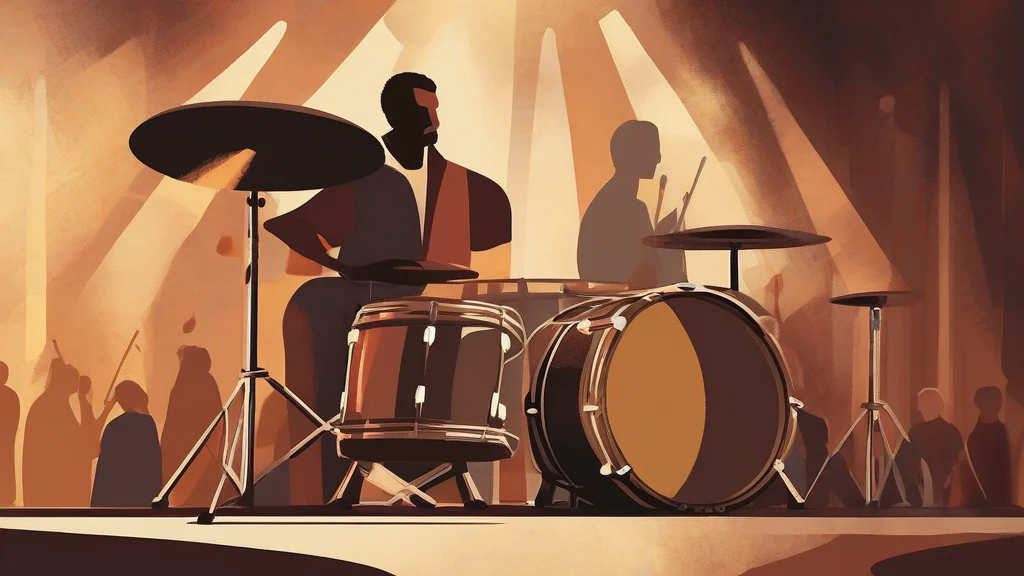
What does percussionist mean?
A percussionist is a musician whose main instrument is percussion, the family of instruments that produce sound when struck, shaken, scraped, or otherwise set vibrating. Common percussion instruments include drums, cymbals, tambourines, maracas, timpani, and many others. In an orchestra, a percussionist may play several related instruments, while a band may assign the role to a drummer or to a specialist in a particular percussion section. The word is useful when referring broadly to a musician responsible for rhythm, accents, and instrumental effects without implying that the person plays only the drum kit. Percussionists are found in orchestras, bands, ensembles, theatre productions, religious music, popular groups, and solo performance. The term is recognized in both British and American English and is generally formal, informative, and role-specific.
nounA percussionist is a musician who plays percussion instruments, such as drums, cymbals, tambourines, or other instruments struck, shaken, or scraped.
- A musician who plays percussion instruments, especially in an orchestra, band, or other musical ensemble.
"The percussionist joined the orchestra for the final performance."
"The school hired a percussionist to work with the marching band."
"As the percussionist played a rapid sequence on the snare drum, the orchestra's tempo increased."
The regular plural is used when referring to more than one percussionist.
"The two percussionists performed together during the finale."
A percussionist turns rhythm into a language of its own, making the beat the pulse of an entire musical performance.
Reviewed by Deb Chak, Editor. AI-assisted content curated by RJS Tech Solutions LLP.
Where does percussionist come from?
The word entered English in the 19th century, formed from percussion and the suffix -ist, meaning a person who performs or specializes in something. English percussion comes through French percussion, from Latin percussio, a striking or hammering, ultimately related to percutere, “to strike through” or “strike.” The related English words percuss and percussive preserve the same Latin root, while percussionist specifically denotes the musician associated with percussion instruments.
How percussionist is actually used
The term is appropriate in formal and professional contexts. In casual speech, a musician who plays only drums may also be called a drummer, while a percussionist may be expected to play several percussion instruments.
Easily confused with percussionist
A drummer specifically plays drums, while a percussionist may play a wider range of percussion instruments, including cymbals, tambourines, and timpani.
An instrumentalist plays any musical instrument, whereas a percussionist specializes in instruments that are struck, shaken, or scraped.