
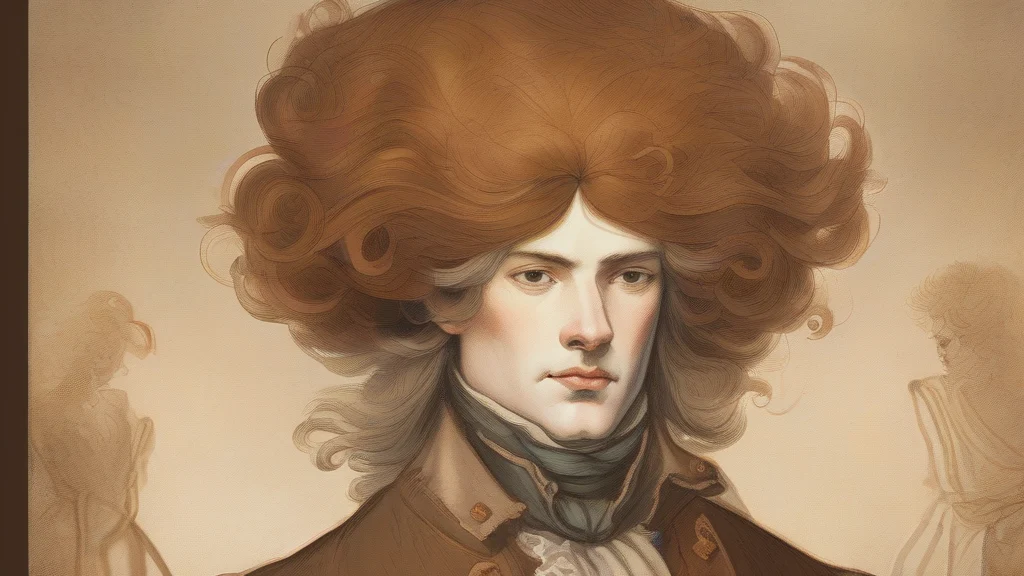
What does peruke mean?
A peruke is a long, elaborate wig, particularly the highly styled or powdered wigs fashionable among European men during the 17th and 18th centuries. Such wigs could be made from human hair, horsehair, wool, or other materials and often required extensive curling, powdering, and professional maintenance. They became associated not only with courtly fashion but also with lawyers, judges, academics, and other figures whose clothing conveyed professional authority. Although "wig" remains the ordinary modern word, "peruke" survives in historical writing, costume descriptions, and ceremonial contexts. In theatre, the word can refer more broadly to a wig chosen to evoke a particular historical period. Its distinctive sound and historical associations make it useful when discussing elite fashion, social status, legal dress, and the material culture of the early modern period.
nounA long, elaborate wig, especially one worn by men in the 17th and 18th centuries. In modern usage, the word is chiefly historical or theatrical.
- A long, elaborate wig, especially a powdered or formally styled wig associated with 17th- and 18th-century European dress.
- In theatrical or historical costume, any wig made to represent an older period of formal fashion.
"The judge appeared on the stage in a powdered peruke and formal robes."
"The actor's peruke fell forward as he bowed to the audience."
"A portrait from the eighteenth century shows the statesman wearing a white peruke."
The plural is uncommon in modern speech because the word itself is mainly historical or theatrical.
"The museum displays several ornate perukes from the eighteenth century."
A peruke was once such a conspicuous symbol of rank and fashion that it was powdered, curled, rebuilt, and even taxed along with other luxury items.
Reviewed by Deb Chak, Editor. AI-assisted content curated by RJS Tech Solutions LLP.
Where does peruke come from?
The word entered English from the obsolete French perruque, meaning "wig," a form preserved in modern French as perruque. The French word developed from a Medieval Latin term associated with a long wig or mass of hair and has relatives in Spanish peluca and Italian parrucca. English usage became especially prominent in the 17th century, when elaborate wigs were central to fashionable and professional dress.
How peruke is actually used
In present-day English, the term is relatively uncommon and usually evokes history, formal costume, courts, judges, or theatre. It is more specific than the general word "wig" and should not generally be used for a small hairpiece.
Easily confused with peruke
A peruke is generally a full, elaborate wig, whereas a toupee is a small wig or hairpiece worn to cover a bald spot.