
What does pesto mean?
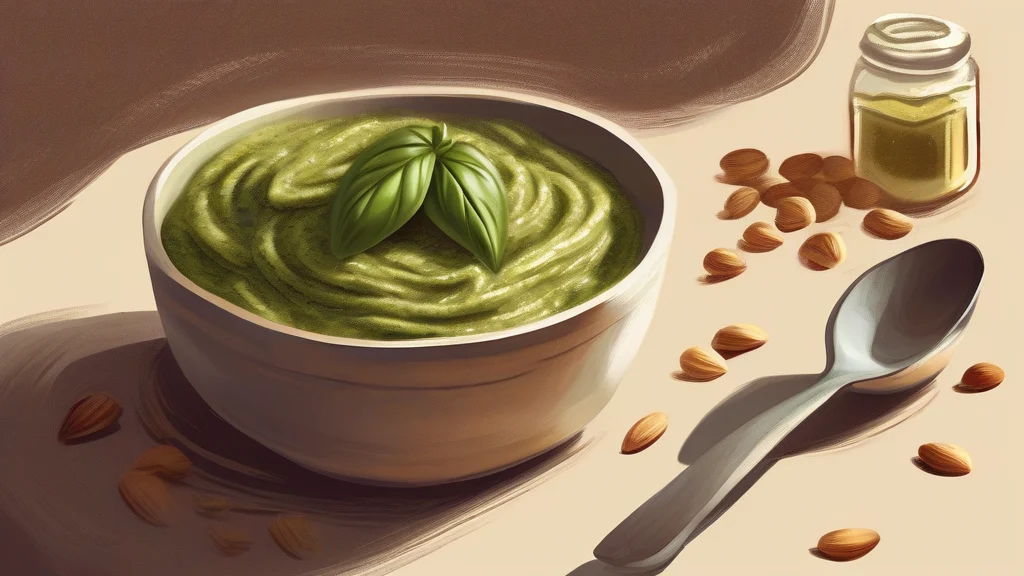
Pesto is a thick, uncooked Italian sauce whose classic ingredients are fresh basil, olive oil, garlic, pine nuts, and grated cheese. It is traditionally associated with Liguria, especially the city of Genoa, and is frequently served with pasta, spread on bread, or used as a sauce for meat and vegetables. Unlike a cooked tomato sauce, pesto is generally made by pounding or blending its ingredients into a smooth, vivid-green paste. The word can also refer more broadly to similarly prepared herb or vegetable sauces, but basil pesto remains the standard interpretation. In everyday English, pesto is widely used without requiring further qualification, while the more formal term “pesto alla genovese” specifically identifies the traditional Genoese style. Its importance in Italian cuisine and its relatively simple preparation have helped make it a familiar condiment well beyond Italy.
nounA thick Italian sauce made primarily from fresh basil, olive oil, garlic, and pine nuts, blended until smooth. It is commonly served with pasta or used as a spread.
- A thick sauce made from basil, olive oil, garlic, and pine nuts or another mild nut.
"She spooned fresh pesto over the roasted vegetables."
"He spread pesto on a toasted baguette for lunch."
"The recipe combines pesto with tomatoes and white beans."
Rarely used; pesto is normally treated as an uncountable mass noun.
"The menu offers three pestos, including classic basil and sun-dried tomato varieties."
Pesto literally means “pounded” in the Ligurian dialect from which the word came.
Reviewed by Deb Chak, Editor. AI-assisted content curated by RJS Tech Solutions LLP.
Where does pesto come from?
The word comes from a Ligurian dialect of Italian, in which pesto means “pounded” or “crushed.” It is associated with the Italian verb pestare, “to pound,” which ultimately derives from Latin. The name reflects the original practice of crushing the ingredients in a mortar; English usage for the basil sauce developed during the 20th century. Related forms such as piston and pistil also descend from Latin roots connected with pounding or crushing.
How pesto is actually used
Pesto is usually treated as an uncountable mass noun. In a broader modern sense, it can refer to sauces made with other herbs or vegetables, although basil pesto is the conventional meaning. Recipes vary considerably in their choice of nuts and cheeses.