What does pharaoh mean?
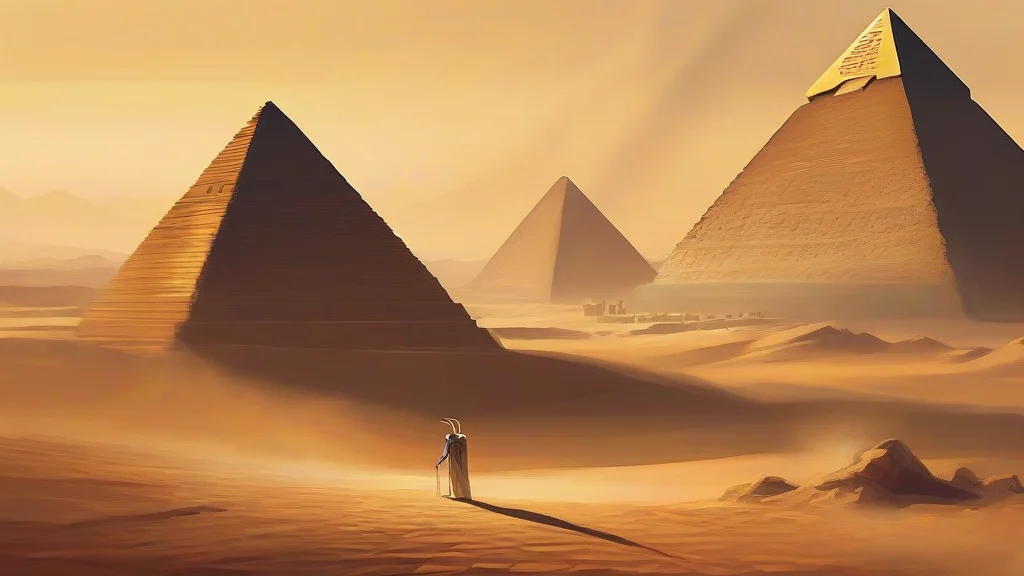
The term pharaoh refers to the monarchs of ancient Egypt, who were considered to be divine beings. The pharaohs were believed to have been chosen by the gods to rule over Egypt, and were often depicted in art and literature as powerful, wise, and just rulers. The term can also be used more broadly to describe a ruler with absolute power, similar to a monarch or sovereign. In modern usage, the term is often used in a formal or historical context to refer to the rulers of ancient Egypt, but can also be used to describe a contemporary leader who exercises absolute power. The pharaohs of ancient Egypt were known for their elaborate tombs, including the pyramids, and their role in shaping the culture and society of ancient Egypt.
The monarch of ancient Egypt
"The pharaoh of Egypt built a magnificent pyramid during his reign."
Often used in a formal or historical context.
A ruler with absolute power
"The dictator was often referred to as a modern-day pharaoh due to his absolute power."
Often used to describe a contemporary leader who exercises absolute power.
Used to refer to multiple rulers or monarchs.
"The pharaohs of ancient Egypt were known for their elaborate tombs and temples."
Reviewed by Deb Chak, Editor. AI-assisted content curated by RJS Tech Solutions LLP.
Etymology of pharaoh
The word 'pharaoh' comes from the Egyptian term 'per-aa', which means 'great house'. This term was used to refer to the royal court, but was eventually adopted by the Greeks as 'pharao', and from there it was borrowed into other languages. The pharaohs of ancient Egypt were the rulers of a vast and powerful empire that lasted for thousands of years, and their legacy continues to be felt in modern times.
How pharaoh is actually used
The term 'pharaoh' is often used to refer to the rulers of ancient Egypt, but can also be used more broadly to describe a ruler with absolute power. It is often used in a formal or historical context.