
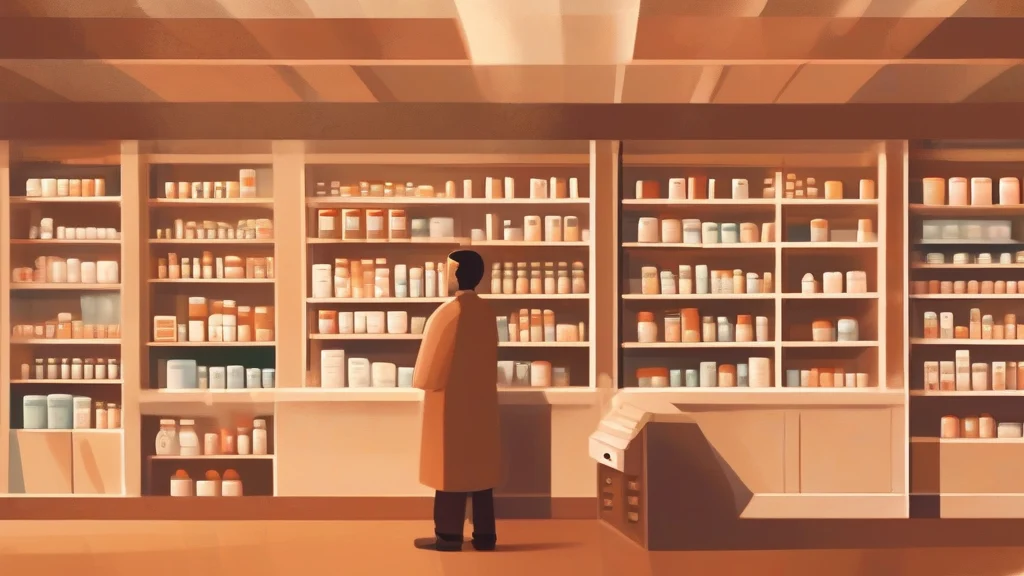
What does pharmacy mean?
Pharmacy most commonly names a place where medicines are prepared, dispensed, and supplied to the public. In this everyday sense, it is closely associated with prescriptions, pharmacists, and advice about the safe use of medicines. The word can also refer more broadly to the art, science, or profession of preparing and dispensing drugs, especially in academic and professional settings such as hospital pharmacy. In Britain, a pharmacy may also be called a chemist's or chemist's shop, while North American English commonly uses drugstore. Although the modern word concerns medicines, its Greek ancestor, pharmakon, could denote a drug or remedy, and that broader history survives in related terms including pharmacology and pharmacopoeia. Pharmacy is useful because it names both a familiar public institution and the specialized knowledge that supports it, while remaining neutral and widely understood in everyday English.
nounA pharmacy is a place where medicines are prepared, dispensed, and supplied, typically under the supervision of a pharmacist. More broadly, the word refers to the art, science, or profession of preparing and dispensing medicines.
- An establishment or part of a hospital where medicines are prepared, dispensed, and supplied.
- The art, science, or profession of preparing and dispensing medicines.
"She collected her prescription from the pharmacy before beginning work."
"The prescription was ready for collection at the pharmacy."
"The course in hospital pharmacy covered drug interactions, dosage, and patient counseling."
The standard plural changes the ending from -y to -ies.
"Several pharmacies in the town offer late-night prescription services."
Pharmacy began with a Greek word for a drug or remedy and grew into both the shop and the science behind it.
Reviewed by Deb Chak, Editor. AI-assisted content curated by RJS Tech Solutions LLP.
Where does pharmacy come from?
Pharmacy comes through Latin from the Greek pharmakeia, a word associated with pharmakon, meaning a drug or remedy. It entered English in the late Middle English period and initially referred to the use or preparation of medicines. Its history is preserved in cognates such as pharmacist, pharmacology, and pharmacopoeia.
Related word forms
How pharmacy is actually used
The term is neutral in everyday and professional use. In British English, a pharmacy may also be called a chemist's, while drugstore is more common in North American English.
Easily confused with pharmacy
A pharmacist is the trained professional who dispenses medicines and advises patients, whereas a pharmacy is the place where medicines are supplied.
Pharmacology is the scientific study of how drugs act on the body, while pharmacy is the place or practice of preparing and dispensing medicines.