
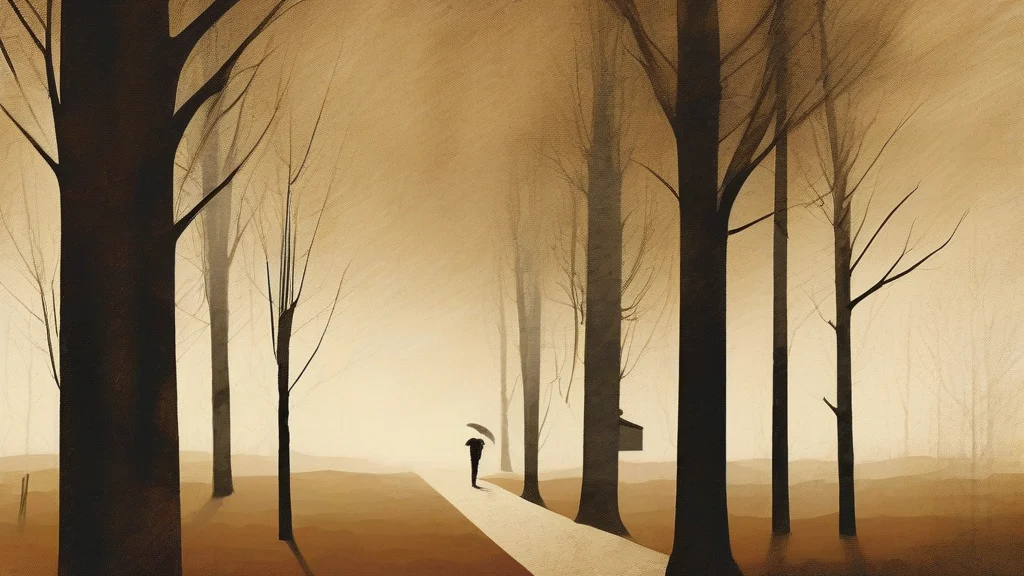
What does pictorialism mean?
Pictorialism describes an approach in which pictures, rather than words, carry the main expressive force. It can refer broadly to the privileging of visual imagery in art, communication, or representation. More specifically, in the history of photography, pictorialism was a movement that sought to distinguish photography from a merely documentary practice by imitating the qualities of painting. Pictorialist photographs commonly used soft focus, atmospheric lighting, unusual tonal contrasts, and carefully posed or arranged subjects. The movement treated the camera as a tool for creating art rather than simply recording appearances. Although some contemporary artists and critics may use the term more generally to describe a strongly visual aesthetic, its established historical meaning is most closely associated with photography around the turn of the twentieth century.
nounPictorialism is the use of pictures as the primary means of expression, communication, or artistic representation. In art history, it also names a late-19th- and early-20th-century photographic movement that sought to give photographs the appearance of paintings through soft focus, tonal effects, and carefully arranged subjects.
- The use of pictures, especially images, as the principal means of artistic expression or communication.
- A late-19th- and early-20th-century movement in photography associated with soft focus, atmospheric effects, and painterly compositions.
"The exhibition explores pictorialism in photography, where light and composition were used to evoke the atmosphere of painted scenes."
"The exhibition examines pictorialism, a movement that treated photography as a fine art."
"Her emphasis on pictorialism makes the documentary images feel almost like paintings."
The plural is rarely needed because the word usually denotes a single movement or approach.
"The book compares several pictorialisms within modern photography."
Pictorialism transformed photography by making photographs look less like records and more like paintings.
Reviewed by Deb Chak, Editor. AI-assisted content curated by RJS Tech Solutions LLP.
Where does pictorialism come from?
The word was formed in the late 19th century from “pictorial,” meaning relating to pictures, together with the suffix “-ism,” which forms a noun denoting a practice, principle, or movement. “Pictorial” itself derives from Latin pictorius, connected with picture and the act of painting. The development of the term reflects the period’s effort to claim artistic status for photography.
Related word forms
How pictorialism is actually used
In general discussion, the term is relatively uncommon and may sound formal or academic. In art history, it usually refers specifically to the photographic movement associated with photographers such as Julia Margaret Cameron, Peter Henry Emerson, and Edward Steichen.
Easily confused with pictorialism
Pictorial is an adjective meaning relating to or consisting of pictures, whereas pictorialism is a noun naming the practice or movement of using pictures expressively.