
What does pillage mean?
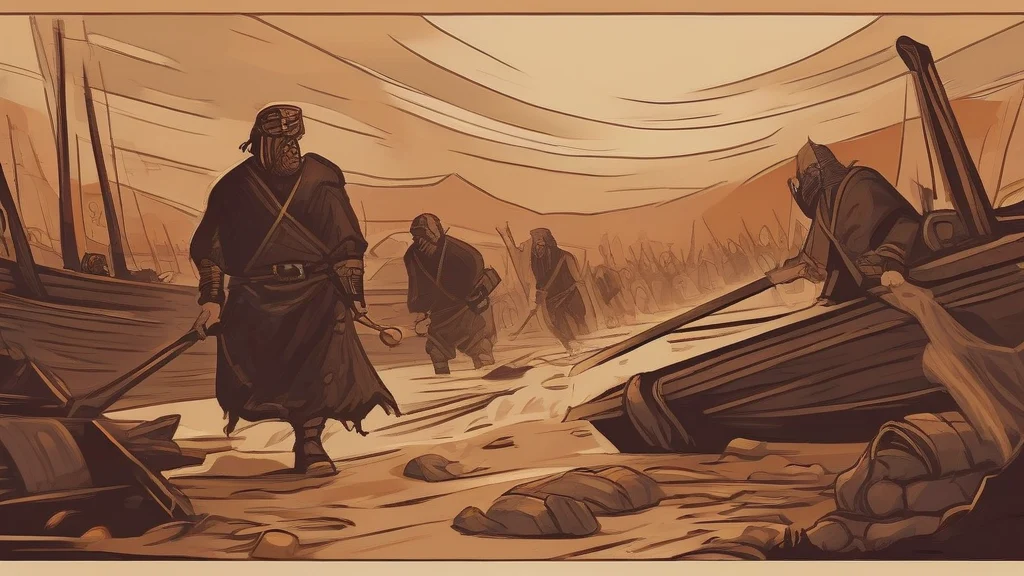
Pillage means to plunder or ravage a place, especially during warfare, piracy, or civil disorder. As a noun, it can refer both to the violent seizure of property and to the goods taken as a result. The word is formal and commonly appears in historical accounts, reports of war, and descriptions of raids by invaders or pirates. Its strong connotations of force, lawlessness, and devastation distinguish it from more neutral words such as steal and from pilfer, which often suggests the covert theft of smaller items. Pillaging is broader and more destructive than simple theft: it suggests an organized attack on a place and the taking of whatever can be carried away. The word is recorded in English from the Middle English period and derives through Anglo-French and Medieval Latin from Latin pilare, meaning “to plunder.” It remains useful because it names not only the property seized but the violent social and military event that produced it.
The act of plundering or ravaging a place, or the property seized during such an attack.
"The court ordered reparations for the pillage of the town during the occupation."
Often used in historical, military, or legal contexts; it can be a mass noun or have the plural form “pillages.”
To plunder, raid, or devastate a place or its inhabitants.
"Soldiers pillaged several villages during the retreat."
Usually transitive, but it can also be used intransitively, as in “the troops pillaged.”
The plural is used mainly for separate acts or instances of plunder, especially in historical or formal writing.
"Witnesses described several pillages of the settlement."
Behind “pillage” is a Latin verb meaning “to plunder,” so the word carries both the action of raiding and the broader idea of taking property by force.
Reviewed by Deb Chak, Editor. AI-assisted content curated by RJS Tech Solutions LLP.
Where does pillage come from?
The word entered Middle English in the late medieval period as “pillage,” through Anglo-French pilage and Medieval Latin pilagium. These forms ultimately derive from Latin pilare, “to plunder” or “ravage.” The related English word pilfer has traditionally been connected with the same Latin root, while piller was an older English term for a plunderer.
Related word forms
How pillage is actually used
Pillage is usually formal and often describes raiding by armed groups, invaders, or pirates. As a noun, it can refer either to the act itself or to property taken during it; as a verb, it commonly takes a place, settlement, or community as its object.
Easily confused with pillage
Pillage usually implies a violent raid or wholesale seizure, whereas pilfer generally means to steal smaller items stealthily.