
What does pisiform mean?
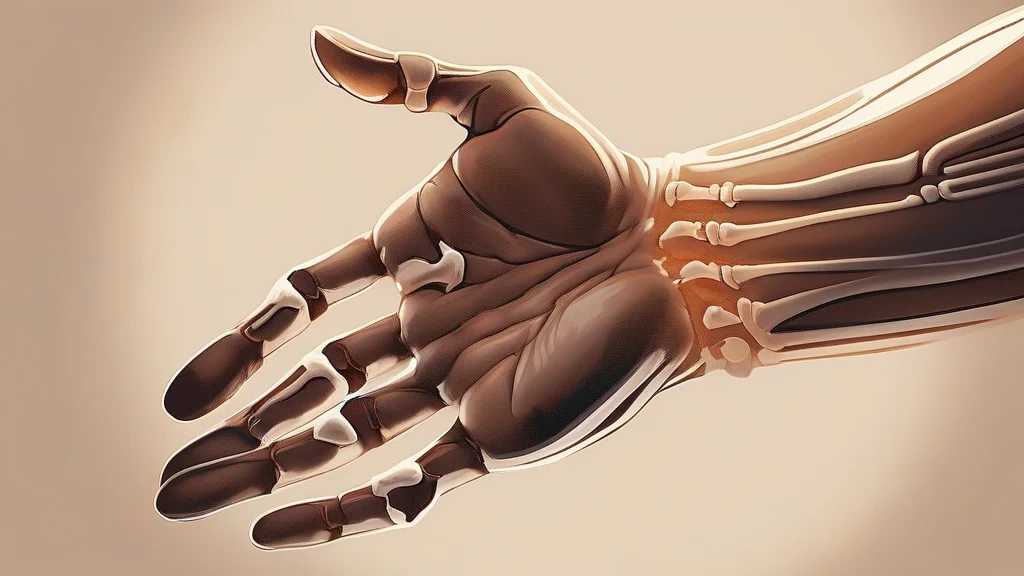
Pisiform is an anatomical term used either for a small carpal bone in the wrist or as an adjective describing something that resembles a pea. The bone takes its name from its rounded, pea-like shape and lies on the little-finger side of the wrist, where it articulates with the triquetrum. In medical writing, pisiform may function as a noun, as in “the pisiform is fractured,” or as a modifier, as in “pisiform bone” and “pisiform joint.” The broader adjective sense, “pea-shaped,” is occasionally applied outside anatomy. Pisiform belongs primarily to formal scientific and clinical vocabulary rather than everyday speech, but it is useful because it names a specific wrist structure and clearly describes its distinctive appearance.
The small, pea-shaped carpal bone in the proximal row of the wrist, situated on the little-finger side.
"The pisiform articulates with the triquetrum and helps stabilize the wrist."
Used chiefly in anatomy and clinical medicine; “pisiform bone” is often the more explicit phrasing.
Resembling a pea in shape; of or relating to the pisiform bone.
"The anatomical description emphasizes the bone's smooth, pisiform appearance."
The general sense “pea-shaped” is rare outside technical or descriptive writing, while the anatomical sense is standard in medicine.
The plural is rare because the noun is usually encountered in medical writing as “pisiform bone”; “pisiform bones” is also common.
"The scan showed fractures of both pisiforms."
Pisiform literally announces its own appearance: its name means “pea-shaped,” and the carpal bone really does resemble a tiny pea.
Reviewed by Deb Chak, Editor. AI-assisted content curated by RJS Tech Solutions LLP.
Where does pisiform come from?
Pisiform was formed in New Latin from Latin pisum, meaning “pea,” together with the element -form, meaning “shape” or “form.” The word therefore literally describes something shaped like a pea. English cognates including pea, pease, and peasecod also trace back to Latin pisum.
How pisiform is actually used
This is specialized anatomical vocabulary used in medical and biological contexts. The standalone noun is relatively uncommon; clinical writing more often uses the fuller phrase “pisiform bone.”