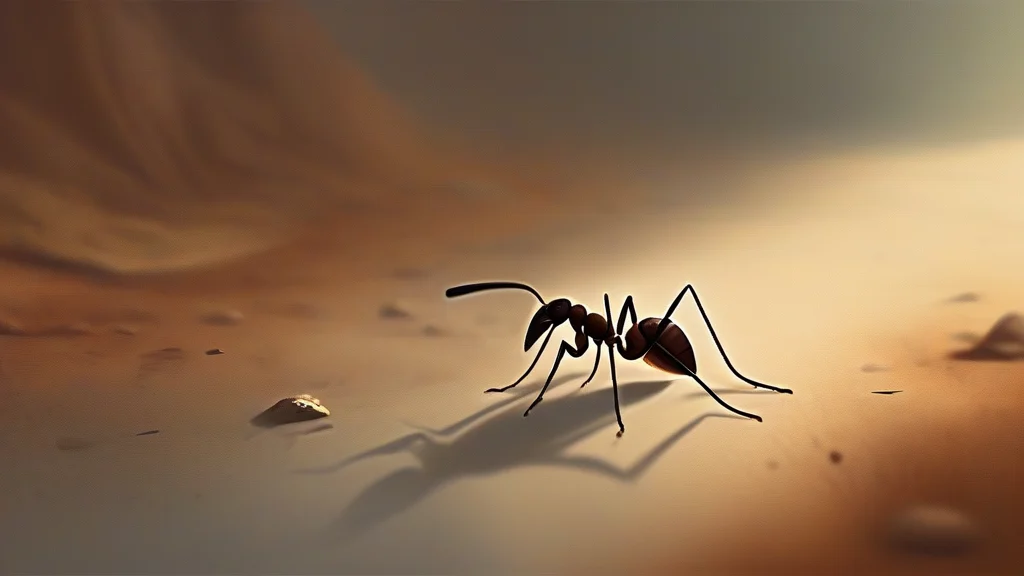
What does pismire mean?
The word pismire refers to an ant, particularly a large or prominent one. Historically used in both British and US English, it is now considered archaic or poetic, replaced by the more common term 'ant'. Pismire was used to describe ants in general, often highlighting their industrious nature. While no longer in common use, it can be found in historical texts and literary works to add a touch of antiquity or whimsy. Understanding pismire provides insight into the evolution of language and how words can fall out of favor over time.
nounAn ant, especially a large or prominent one.
- A type of ant, especially large or prominent ones
"The pismire scurried across the kitchen counter, carrying a crumb back to its nest."
"The pismire scurried across the kitchen counter, carrying a crumb back to its nest."
"In medieval times, people would watch pismires at work to pass the time."
The plural form is used when referring to multiple ants of this type.
"The garden was infested with many pismires."
Reviewed by Deb Chak, Editor. AI-assisted content curated by RJS Tech Solutions LLP.
Etymology of pismire
The term pismire originates from the Old English words 'pīs' (pease) and 'mīr' (ant), likely due to the resemblance in size and industrious nature between ants and the pease weevil. It has been used in English since before the 12th century.
How pismire is actually used
This term is now considered archaic or poetic; in modern English, 'ant' is used instead.