
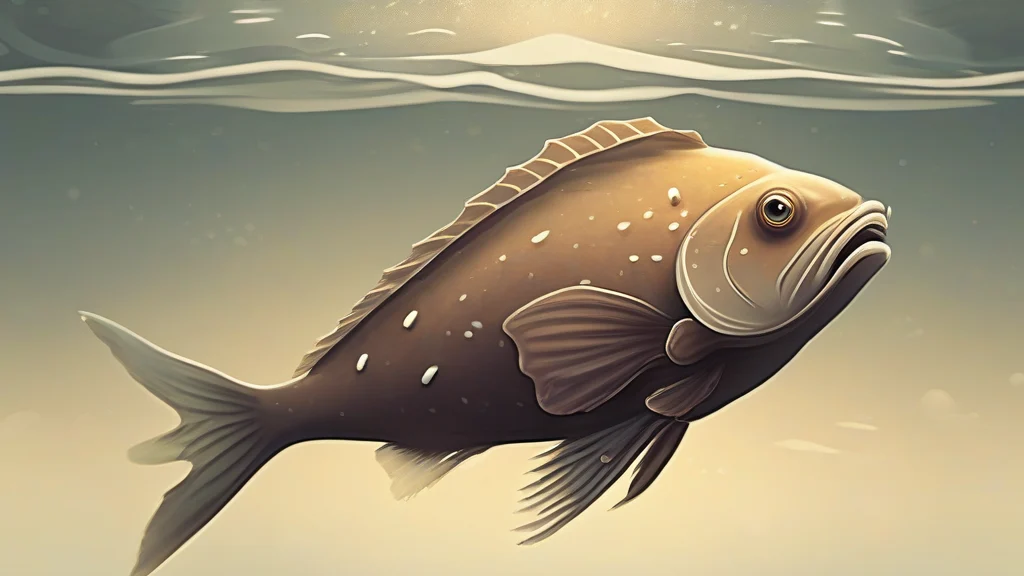
What does plaice mean?
Plaice is primarily the name of a European marine flatfish, a broad, brown fish with orange spots that is valued for its delicate flesh. In British English, the word usually refers specifically to Platichthys platessa, a familiar feature of fish and chip shops and traditional British cuisine. Some North American usages apply the name more broadly to the summer flounder and related flatfishes. In a restaurant or recipe, “plaice” normally refers to the fish as food, so the singular can be used for a whole fish or a portion without further qualification. The word is pronounced like “place” in British English, which can occasionally cause confusion in speech or informal writing. Its combination of an unusual traditional food context and a familiar homophone makes it especially memorable: one is a place on a map, while the other may arrive at the table covered in batter and accompanied by chips.
nounA marine flatfish, especially the European plaice (Platichthys platessa), valued as food. In some North American usages, the name also refers to the summer flounder or related flatfishes.
- The European plaice, a brownish marine flatfish with orange spots, valued as food.
- In some North American usages, a name for the summer flounder or related flatfishes.
"We ordered pan-fried plaice and chips at the pub."
"The plaice was fried crisp and served with lemon and chips."
"Several plaices were displayed at the fish counter before the evening market."
Use plaices when referring to multiple individual fish; in culinary contexts, singular plaice may instead be used collectively for the flesh.
"The fishermen sold two plaices at the morning market."
Plaice and place are exact homophones in British English, but one belongs on a dinner plate while the other is a location.
Reviewed by Deb Chak, Editor. AI-assisted content curated by RJS Tech Solutions LLP.
Where does plaice come from?
The word entered Middle English as plais, borrowed from Old French plais, a term for a flatfish. It ultimately derives from a Mediterranean Latin form associated with the Greek words for “broad” or “flat,” from the root plak-. The same root underlies related English words such as plateau, plate, plaque, and placenta.
How plaice is actually used
In contemporary British English, plaice usually refers specifically to the European flatfish Platichthys platessa. Some North American dictionaries also record broader or older usages connected with the summer flounder.
Easily confused with plaice
Plaice is a flatfish, whereas a place is a position, location, or setting; the two words are homophones in British English.