
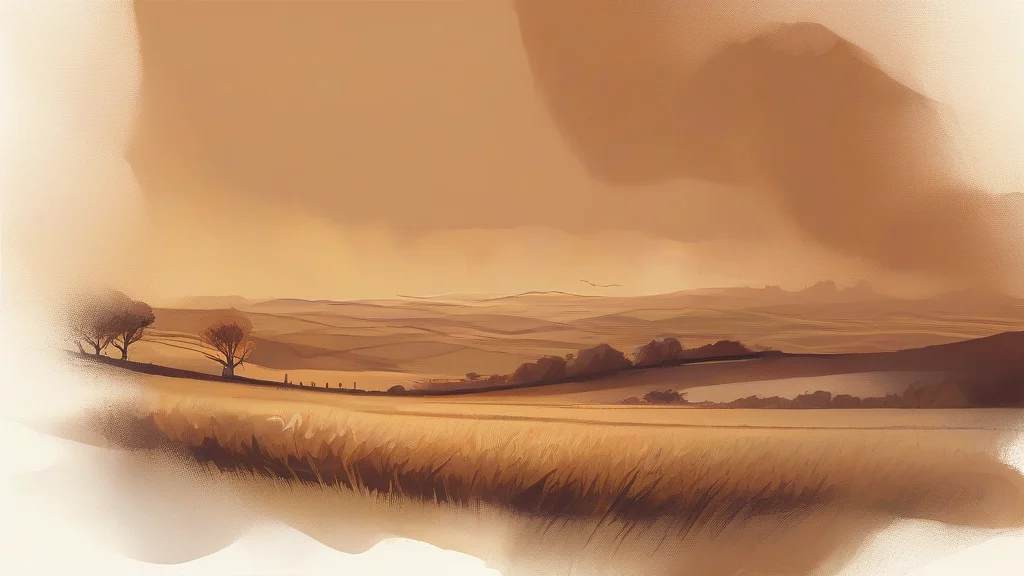
What does plain mean?
Plain is a versatile word describing something that is simple, direct, undecorated, clear, or ordinary. In phrases such as "plain English" and "plain language," it emphasizes communication that is easy to understand and free from unnecessary complication. A plain can also mean an open, level stretch of land, while "in plain" refers to a harsh or conspicuous condition. The adjective can describe appearance, writing, speech, or even a surface without features. Historically, the word is related to Latin planus, meaning "level" or "flat," and that sense survives in both the idea of flat ground and the idea of straightforward expression. Although "plain" can sometimes imply that something is dull, its most common educational and social use is positive: describing clarity, honesty, and lack of unnecessary embellishment.
Without ornament, complication, or unnecessary features; clear and easy to understand.
"The teacher gave a plain explanation of the difficult idea."
The adjective is especially common in combinations such as "plain English," "plain language," and "plain sight."
An open, level area of land, often with relatively few trees or buildings.
"The road crossed a broad plain between the mountains."
In literary and historical contexts, "a plain" can also mean a complaint or grievance, especially in the phrase "in plain."
Clearly, directly, or unmistakably.
"The distinction was plainly visible from the other side of the room."
This use is common but is usually interchangeable with the adverb form plainly in modern English.
To complain or state a grievance.
"He continued to plain about the conditions in the building."
This verb is uncommon in modern standard English and is now mainly literary, historical, or regional.
The plural is used especially for large areas of level or open land, as in "the Great Plains."
"Wild horses once roamed the plains."
From the Latin for "level," plain eventually came to describe both ordinary things and speech that leaves no room for confusion.
Reviewed by Deb Chak, Editor. AI-assisted content curated by RJS Tech Solutions LLP.
Where does plain come from?
Plain entered English from Old French plain, which came from Latin planus, meaning "level," "flat," or "clear." In Middle English, the word developed meanings connected with an open, level landscape and with straightforward speech or manner. It is related to cognates such as plane, plan, and plant, all of which reflect the same Latin root.
Related word forms
How plain is actually used
When describing speech or writing, plain usually suggests clarity and lack of ornament rather than rudeness. The expression "plainly" is common in formal and informal usage, while the verb "plain" is now chiefly literary or archaic.
Easily confused with plain
A plane is a flat surface or an aircraft, whereas a plain is an open area of level land.
A pane is a single sheet of glass in a window or door, while plain describes something unadorned, clear, or level.