
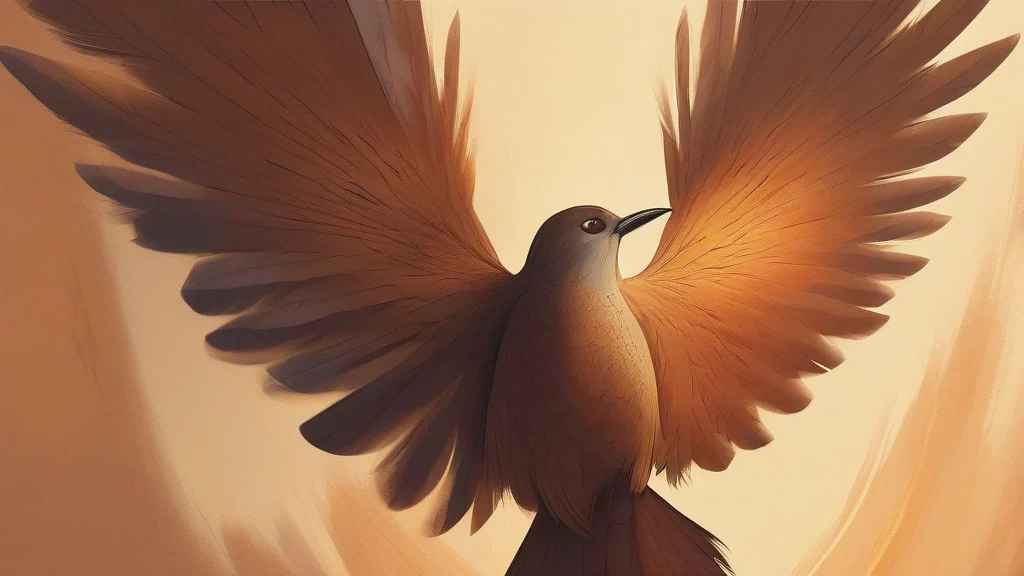
What does plumate mean?
Plumate means covered with feathers or furnished with a feathery covering. It is used especially in zoological and ornithological descriptions when the presence or density of feathers is relevant to identifying or describing an organism. The word is formal and uncommon in everyday English; general descriptions more often use feathered, plumed, or covered in feathers. Plumate comes from the same Latin source as plume and plumage, and its meaning is correspondingly specific: it describes a physical covering rather than simply the possession of a single decorative feather. Although relatively rare, the word is useful in precise biological writing because it directly identifies feather-covered structures without suggesting that the feathers serve an ornamental purpose.
adjectiveCovered with feathers or having a feathery covering.
- Covered with feathers or possessing a feathery covering.
"The bird's plumate tail was fanned across the nest."
"The species is distinguished by its plumate legs and short bill."
"Natural-history descriptions of the bird refer to its densely plumate body."
From the same Latin root as plume, plumate preserves an ancient association between feathers and ornamental display.
Reviewed by Deb Chak, Editor. AI-assisted content curated by RJS Tech Solutions LLP.
Where does plumate come from?
Plumate derives from the Latin plūmātus, a participial adjective formed from plūma, meaning feather. English borrowed it in the early 19th century for descriptions of naturally feathered or feather-like structures. The same Latin root produced plume, plumage, plumaceous, and plumosity, although these words developed different shades and grammatical functions.
How plumate is actually used
This is a rare, formal or specialized adjective, occurring chiefly in zoological, ornithological, and biological descriptions. It is uncommon in ordinary speech.
Easily confused with plumate
Plumate means covered with feathers, whereas plumed more often means decorated with or bearing a plume.