
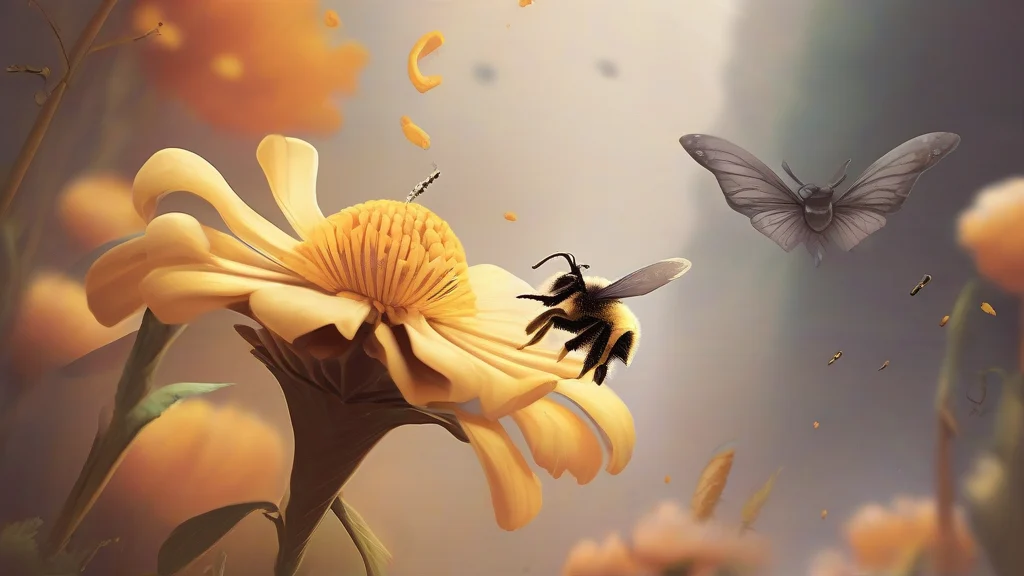
What does pollinator mean?
A pollinator is an animal that moves pollen between flowering plants, allowing fertilization and the production of seeds and fruit. Bees are the best-known pollinators, but butterflies, moths, flies, beetles, wasps, and other insects also perform this role. Some birds and bats may likewise pollinate particular plants. By extension, the word can refer more technically to wind, water, or another mechanism that transports pollen. Pollination is especially important for the reproduction of many flowering plants and for agricultural crops that depend on insect pollinators. Ecologists frequently speak of declines in pollinator abundance, diversity, or habitat because the loss of these animals can reduce plant reproduction and affect entire ecosystems. The term also appears widely in gardening, conservation, and public-health discussions concerning pesticides, habitat loss, climate change, and the planting of flowers that provide nectar, pollen, and shelter. Although "pollinator" is sometimes treated as a general word for pollination agents, its everyday use most strongly refers to living animal visitors that carry pollen from flower to flower.
nounAn animal, typically an insect such as a bee or butterfly, that transfers pollen between flowering plants, enabling fertilization and seed production. The term can also refer more broadly to wind or water-mediated pollen transfer.
- An animal that carries pollen from one flowering plant to another, thereby assisting reproduction.
- By extension, any agent or mechanism involved in the transfer of pollen, including wind and water.
"Native wildflowers provide food and shelter for pollinators throughout the growing season."
"Hoverflies are valuable pollinators of many garden crops."
"Planting a diverse range of native flowers can support pollinators when few plants are in bloom."
The plural is used for multiple individual pollinators, multiple species, or pollinator populations collectively.
"Gardeners can support pollinators by choosing flowering plants that bloom at different times of year."
Bees are famous pollinators, but butterflies, moths, beetles, flies, wasps, and many other creatures keep flowering plants alive too.
Reviewed by Deb Chak, Editor. AI-assisted content curated by RJS Tech Solutions LLP.
Where does pollinator come from?
The English word "pollinator" was formed in the 19th century from "pollinate" with the agent suffix "-or." "Pollinate" ultimately comes through Latin pollinare, meaning to dust or sprinkle with pollen, from Latin pollen, meaning fine dust or pollen. Related English forms include "pollination" and the verb "pollinate."
Related word forms
How pollinator is actually used
In everyday ecological usage, the term usually refers to animals, especially insects. The broader sense involving wind or water is more technical. In British English, the related verb is commonly spelled with a double l, as in "pollinate."
Easily confused with pollinator
A pollinator is the animal that transfers pollen, whereas pollination is the process by which pollen is transferred.